The Thrill That Lived at the End of Your Driveway: How We Killed the Joy of the Mailbox
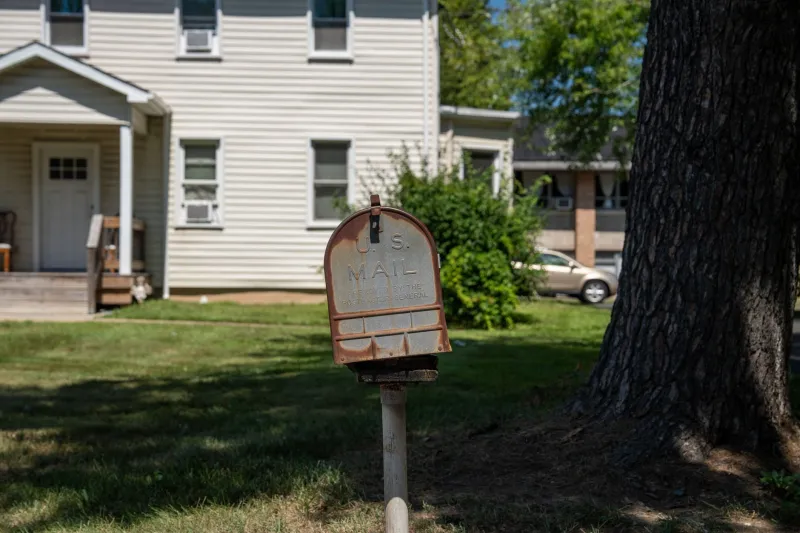
Somewhere around 3:15 every weekday afternoon, something quietly magical used to happen in American neighborhoods. A truck rolled down the street. A metal door swung open. And whatever landed inside that little box at the end of the driveway had the power to make or ruin your entire evening.
It sounds dramatic. It wasn't. That was just life before the internet decided that waiting was a problem to be solved.
When Anticipation Was the Whole Point
If you grew up in the 1970s, 80s, or even early 90s, you probably remember the specific feeling of expecting something in the mail. A birthday card from your grandmother in Ohio. A reply letter from a pen pal in another state. The Sears Wish Book arriving sometime in October like a glossy, paper-bound promise that Christmas was actually coming.
These weren't small moments. They were events. You'd check the mailbox before you even put your backpack down. You'd recognize handwriting on an envelope and feel something — actual, physical anticipation — before you'd even torn the flap open.
Part of what made it powerful was the distance it had traveled. A letter from a cousin in Florida had been touched by human hands, sealed with a real tongue, stamped, sorted, loaded, driven, and delivered across hundreds of miles just to reach you. That journey gave it weight. You could feel the effort in the paper.
The Ritual Had Rules
Checking the mail wasn't just a task. It was a small daily ceremony with its own unwritten protocol.
You didn't send someone else. You went yourself. You flipped through the stack in a specific order — junk to the back, anything handwritten to the front. Bills got handed to a parent with a particular kind of apologetic gravity. Catalogs got claimed immediately and disappeared into someone's bedroom for the better part of an evening.
Sweepstakes entries were their own subculture. Publishers Clearing House made millions of Americans genuinely believe — year after year, decade after decade — that a man with a giant check and a camera crew might actually show up at their door. People filled out those entry cards with care. They mailed them back with intention. The waiting was part of the game, and the game was part of the fun.
 Photo: Publishers Clearing House, via s3.amazonaws.com
Even the junk mail had a certain texture to it. Coupon booklets. Local restaurant menus. The occasional mysterious envelope that looked important until you opened it and realized it absolutely wasn't. You still opened it, though. Because you never quite knew.
What Instant Delivery Actually Cost Us
Today, the average American receives around 100 emails per day. Push notifications arrive in clusters. Package tracking apps tell you exactly where your delivery driver is, down to the block. You can watch your order move across a map in real time.
And yet almost none of it feels like anything.
That's not an accident. When everything arrives instantly, the brain stops registering arrival as meaningful. The notification ping that once would have made your pulse jump now gets dismissed before you've consciously processed it. We've optimized anticipation completely out of the experience — and in doing so, we've optimized out the reward.
Neuroscience has a word for what we used to feel walking to that mailbox: dopamine anticipation. The brain releases feel-good chemicals not just when you receive something good, but during the buildup to receiving it. The waiting was neurologically part of the pleasure. Cut the waiting, and you cut a significant portion of the joy.
We didn't just speed up delivery. We accidentally dismantled the emotional architecture around it.
The Last People Who Still Get It
Ask anyone over fifty about a letter they received that they still remember. Odds are they can tell you exactly what it said, who sent it, and what season it arrived in. The paper might even still be in a shoebox somewhere.
Now ask someone under thirty to name an email they remember receiving. Not a confirmation. Not a promotional offer. An actual message from an actual person that stuck with them. The silence is telling.
There are pockets of resistance. People who still send Christmas cards by hand. Couples who write letters when one of them travels. A small but dedicated community of pen pals who deliberately choose the slow lane because they understand that the delay is the point.
They're onto something the rest of us traded away without fully realizing it.
We Didn't Lose Convenience. We Lost Meaning.
Nobody is seriously suggesting we go back to waiting three weeks for a reply to a question that now takes thirty seconds to answer. That ship has sailed, and honestly, good riddance to a lot of what it carried.
But there's a difference between efficiency and erosion. We didn't just make communication faster. We fundamentally changed what communication feels like to receive. The mailbox used to be a daily reminder that someone, somewhere, had taken time specifically for you. That they'd sat down, thought about you, written something out, and sent it on a journey that ended at your door.
Now the closest equivalent is a text that says "lol" and disappears into a thread of two thousand others.
The mailbox is still there, of course. It still gets opened every afternoon. But mostly it holds utility bills and pizza coupons and the occasional Amazon package notification that you already knew was coming because you watched it travel across the map on your phone.
The mystery is gone. The anticipation is gone. And with them, a small but genuine daily joy that we didn't even know we were giving up.
Somewhere in that metal box at the end of the driveway, America used to keep a little piece of wonder. We just forgot to fight for it before it was too late.