He Noticed You Weren't There: The Mail Carrier Who Was America's Invisible Guardian

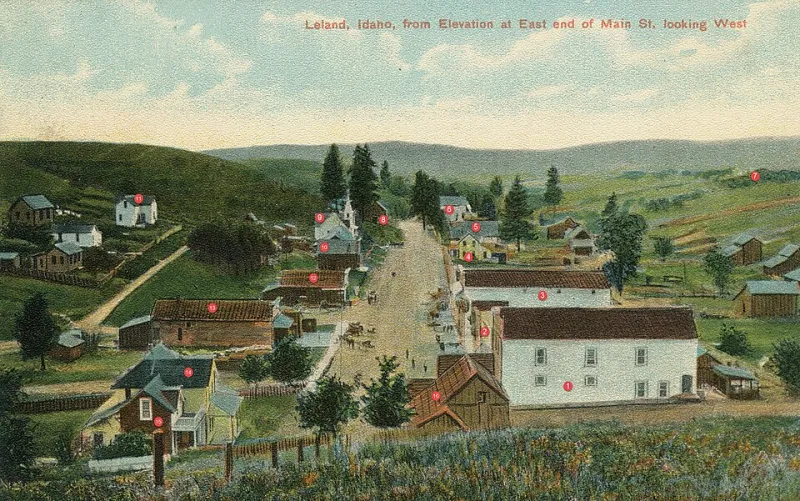
Photo: Peter Bakema, GFDL 1.2, via Wikimedia Commons
He Noticed You Weren't There: The Mail Carrier Who Was America's Invisible Guardian
Mrs. Kowalski hadn't collected her mail in three days. That was unusual. She was the kind of woman who met the carrier at the box every afternoon, rain or shine, sometimes with a comment about the weather and sometimes with a cookie wrapped in a paper towel. Three days of untouched envelopes was enough for her carrier, a man named Gerald who'd walked that route for eleven years, to knock on the door. When no one answered, he called her daughter. She'd had a fall.
This story, or something very close to it, played out thousands of times across twentieth-century America. Not because it was policy. Not because anyone told Gerald to do it. Because he'd walked the same streets long enough to know what normal looked like — and when it wasn't.
The Route as a Relationship
For most of the last century, the mail carrier was one of the most consistent presences in American daily life. Not a glamorous figure. Not someone you'd write a movie about. But a person who showed up, five or six days a week, in every kind of weather, on a schedule you could nearly set your watch by.
That consistency built something that's hard to manufacture intentionally: familiarity. Carriers learned the rhythms of the households on their routes. They knew who lived alone. They knew who was elderly. They knew who had recently lost a spouse, or who had a kid away at college who sent letters home every week without fail.
This wasn't surveillance. It was attention — the natural byproduct of showing up in the same place, over and over, for years.
And in an era before social media check-ins, before fitness trackers and smart home monitors, before any of the digital systems we now use to keep tabs on each other, that daily human presence was doing quiet, unacknowledged work as a community safety net.
The Wellness Check Nobody Called a Wellness Check
Research on social isolation has grown considerably more urgent in recent years — the Surgeon General's office has described loneliness as a public health epidemic. Elderly Americans living alone are particularly vulnerable. And yet, for much of the twentieth century, there was a built-in, daily, human touchpoint for exactly that population: the person who came to the door.
Carriers noticed when newspapers piled up. They noticed when curtains that were always open stayed drawn. They noticed when a regular wave through the window stopped happening. These were informal signals, processed by a human being who had context, who could distinguish between "she's visiting her grandkids" and "something might be wrong."
In some communities, this function was semi-formalized. Carriers were encouraged to report concerns. Some post offices had arrangements with local senior services. But mostly, it operated the way the best community safety nets always do — organically, through people who simply gave a damn about the places they worked.
When the Algorithm Took the Wheel
The transformation of mail delivery into pure logistics happened slowly, then very quickly.
Package volume exploded. E-commerce rewrote the economics of delivery. Amazon entered the picture and effectively created a parallel delivery infrastructure. The USPS, facing its own financial pressures, optimized routes for efficiency. Private delivery companies — operating on tighter margins and faster timelines — tracked their drivers by GPS and measured performance in stops per hour.
The result is a delivery culture almost perfectly engineered to eliminate the kind of human presence that made Gerald's story possible. Drivers are on the clock in a way that doesn't leave room for noticing things. Routes change constantly, assigned by algorithm rather than built over years. The person leaving a package on your porch today may never have been on your street before and may never come back.
There's nothing wrong with any of this, exactly, if the only thing you're measuring is whether the package arrived on time. But packages aren't all that was being delivered.
The Loneliness We Optimized Into Existence
It's worth sitting with the irony for a moment. We have more ways to stay connected than at any point in human history. We have video calls and group chats and location sharing and smart doorbells that log every person who walks past. And yet social isolation has climbed steadily, particularly among older Americans, particularly in the years when delivery became faster and more impersonal simultaneously.
The mail carrier wasn't a social worker. He wasn't trained in elder care or crisis intervention. He was just a person who came by every day and paid attention. That's a low bar, and it turns out it was doing an enormous amount of work.
Some countries have recognized this. France's postal service launched a program called "Veiller sur mes parents" — "Watch over my parents" — where carriers perform formal wellness checks on elderly subscribers for a monthly fee. Japan Post has similar programs. The idea that the postal route could function as a community care network isn't radical. It's just something America stopped valuing before it figured out what it was losing.
What Gets Lost When We Only Count Deliveries
There's a version of progress that's genuinely hard to argue with. Packages arrive faster. Tracking is precise. The logistical machinery of modern delivery is a genuine marvel of coordination.
But there's a cost that doesn't show up on any efficiency spreadsheet: the disappearance of daily human presence in neighborhoods that increasingly have very little of it.
Mrs. Kowalski needed Gerald to knock on her door. Not because she'd subscribed to a wellness service. Not because her family had set up a monitoring system. But because a man who walked the same street every day for eleven years noticed that something was different.
That's not a feature you can add back with better software. It's what happens when a job is done by someone who actually belongs to the place they're serving — and what disappears when belonging stops being part of the job description.