The Guy Who Knew Where Every Bolt Was Buried: America's Lost Hardware Store Era
The Guy Who Knew Where Every Bolt Was Buried: America's Lost Hardware Store Era
Walk into your local hardware megastore on a Saturday morning and you'll encounter a particular kind of helplessness. Somewhere in those 100,000 square feet, behind towers of identical orange shelving, is the specific type of hinge you need. You know it exists. You just can't find it. The teenager in the branded vest is as lost as you are. The self-checkout machine doesn't care. And the app, somehow, wants you to buy a different hinge.
It wasn't always like this.
The Man Behind the Counter
For most of the twentieth century, the hardware store was one of the most quietly essential businesses in any American town. Not flashy. Not particularly photogenic. But indispensable in a way that's hard to overstate.
The owner — and it was almost always the owner — knew his inventory the way a librarian knows books. He knew where the 3/8-inch lag screws were. He knew which caulk held up in a wet basement and which one didn't. He knew that the Hendersons on Maple Street had old cast-iron pipes and needed a different fitting than the newer houses on the east side of town.
 Photo: Maple Street, via breakfastwithnick.com
That last part is what made these places genuinely remarkable. The knowledge wasn't just technical — it was local. It was accumulated over decades of watching the same neighborhood age, crack, flood, settle, and rebuild. When you walked in with a broken piece of something and said "I don't know what this is called, but it goes here," he could usually figure it out in thirty seconds.
Credit on a Handshake
The other thing these stores offered, quietly and without fanfare, was trust made tangible.
In small towns across America, hardware store owners extended informal credit to customers they'd known for years. You needed supplies to fix a fence before winter hit and payday was two weeks away? They'd write it in a ledger. You'd settle up when you could. No credit check. No interest rate disclosed in twelve-point font. Just a reasonable bet that a neighbor would do right by another neighbor.
This wasn't naive. It was community infrastructure functioning exactly as intended. The store owner had skin in the game — he lived in the same town, attended the same church, coached the same Little League. His reputation was tied to how he treated people, and theirs was tied to how they treated him. That mutual accountability was the whole system.
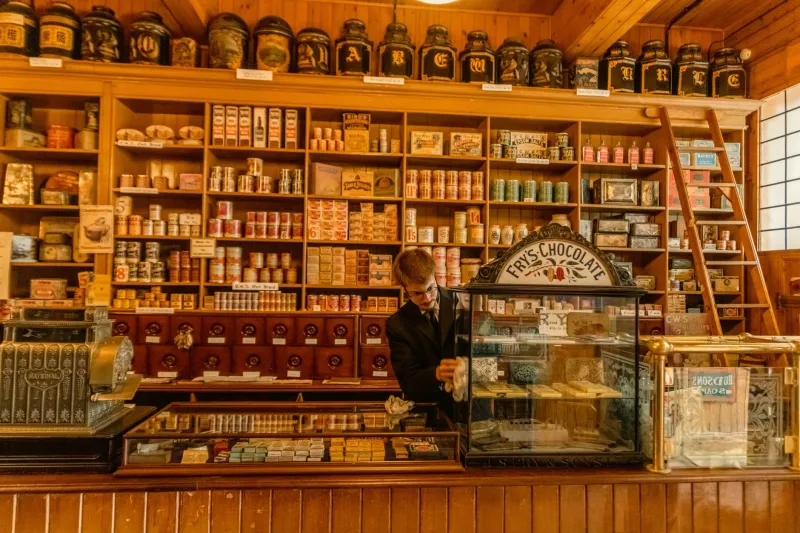
 Photo: Little League, via res.cloudinary.com
Contrast that with today's financing options at the big-box stores, which involve promotional APRs, store credit cards, and fine print that requires a magnifying glass to read.
What a Five-Star Review Can't Replace
Modern retail has tried to reconstruct expertise through algorithms and ratings. You can read 847 reviews of a specific drill bit. You can watch a YouTube video. You can scan a QR code that takes you to a manufacturer's website with a FAQ section.
None of it replicates the experience of describing your problem out loud to someone who has solved that exact problem a hundred times before, in houses exactly like yours, in weather exactly like this.
The independent hardware store owner carried decades of applied, hyperlocal knowledge in his head. He'd seen what worked and what failed. He'd watched products come and go. He knew which brand of paint held up on the north-facing side of a house in your specific climate. He'd made the mistakes so you didn't have to.
That kind of expertise isn't reviewable. It isn't scalable. And it can't be replicated by a store that turns over its minimum-wage staff every three months.
The Slow Squeeze
The decline wasn't dramatic. It happened the way most cultural losses happen — gradually, then all at once.
Through the 1980s and 1990s, the big-box hardware chains expanded aggressively. They offered lower prices, wider selection, and longer hours. For consumers focused on the bottom line, it was hard to argue with. The independent stores couldn't compete on volume. They couldn't match the buying power. And one by one, they closed.
What replaced them wasn't just a different kind of store. It was a different kind of relationship — or more accurately, the absence of one. The transaction remained. The connection evaporated.
More Than a Place to Buy Nails
Here's what gets lost in the pure retail analysis: these stores were social anchors.
On a Saturday morning, the hardware store was where men gathered to talk about projects, to compare notes, to get advice they didn't know they needed. It was one of the few places where working knowledge — the ability to fix things, to build things, to solve physical problems — was genuinely respected and rewarded.
The guy behind the counter wasn't just selling you a product. He was validating that the problem you were trying to solve was worth solving, and that you were capable of solving it. There's something quietly meaningful about that kind of confidence, extended by someone whose opinion you actually trusted.
When we talk about what's been lost in American community life, we tend to focus on the big things. The churches. The civic organizations. The neighborhood schools. But the hardware store deserves a place in that conversation too.
It was where the town's practical intelligence lived. Where trust was transacted daily in small amounts. Where a handshake was worth more than any star rating.
Somewhere in those 100,000 square feet, there's a hinge that'll fix your problem. Good luck finding anyone who knows where it is.