The Man Behind the Counter Knew Exactly Which Screw You Needed
Photo: Asahel Curtis, Public domain, via Wikimedia Commons
Walk into a neighborhood hardware store in 1967 and the experience started before you reached the counter. The smell hit you first — oil, sawdust, metal, rubber, decades of accumulated usefulness compressed into a space roughly the size of a modern convenience store. The owner, who was usually also the guy who'd opened the place twenty years earlier, looked up from whatever he was doing and said something like: back again? How'd that pipe fitting work out?
He remembered. That was the thing. He remembered what you were building, what you'd bought last month, what your house was like because he'd probably been inside it at some point. The neighborhood hardware store wasn't just retail. It was a repository of local practical knowledge, and the man behind the counter was its living index.
That world is mostly gone now. And the loss runs deeper than nostalgia.
What These Stores Actually Were
At their peak, independent hardware stores were everywhere in American towns and cities. They weren't chains, weren't franchises, weren't coordinated by a corporate office in Atlanta or Minneapolis. They were family operations, often passed from father to son, built on the logic that a community of homeowners and tradespeople needed a reliable local source for the things that kept buildings standing and machines running.
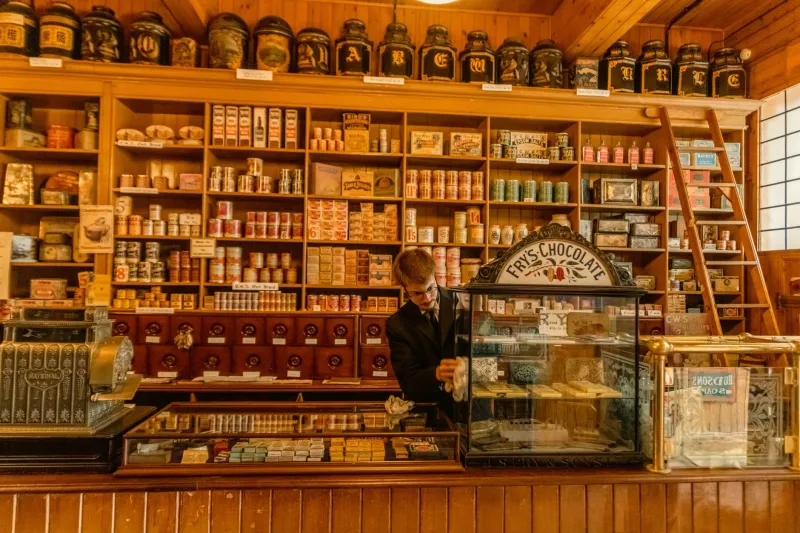
The inventory was dense and specific in ways that defy modern retail logic. Bins of individual screws, sold by the piece or the handful. Drawers of washers in seventeen sizes. Specialty paint in custom-mixed colors matched to your existing walls from a chip you brought in. Plumbing parts for fixtures that hadn't been manufactured since 1940, because the owner knew people still had those fixtures and still needed those parts.
You didn't browse. You described your problem and the owner diagnosed it. That distinction matters enormously. The transaction was consultative. You came in with a leaking faucet or a door that wouldn't close right or a project you'd half-started and weren't sure how to finish, and the person behind the counter walked you through it. Sometimes they drew a quick diagram on a scrap of paper. Sometimes they called over another customer who'd solved the same problem last spring. The store was a node in a network of shared practical knowledge.
The Big Box Arrival
Home Depot opened its first stores in Atlanta in 1979. Lowe's had been around since the late 1940s but expanded aggressively through the 1980s. The pitch was straightforward and genuinely compelling: more inventory, lower prices, one-stop shopping for every home improvement need from lumber to appliances to garden supplies.
 Photo: Home Depot, via paradehomeandgarden.com
For consumers, the value was real. The selection was staggering. The prices were hard to argue with. A homeowner tackling a full bathroom renovation could find everything in a single trip rather than visiting three different specialty suppliers. The scale that killed the neighborhood store was the same scale that made big projects more accessible to ordinary people.
But the trade-off showed up immediately for anyone paying attention. The big-box store doesn't know you. The floor associate in the plumbing aisle is often a recent hire reading from the same product label you're already holding. The institutional knowledge that lived in the neighborhood store — accumulated over decades, specific to local housing stock, local water conditions, local building quirks — didn't transfer to the warehouse model. It just evaporated.
What You Can't Find in Aisle 14
There's a particular kind of help that no floor plan can replicate. When a hardware store owner told you that fitting won't work for copper pipe, you want the brass one, third bin on your left, he was drawing on something real: he'd seen that mistake made a hundred times. He knew which products failed in your climate. He knew which brands were reliable and which ones looked good in the package and fell apart in six months.
That knowledge existed because he'd been selling to the same community for twenty years. He'd heard the follow-up stories. He knew when his advice worked and when it hadn't. Feedback loops existed in a way they simply don't when you're one anonymous transaction in a store that processes ten thousand customers a week.
The YouTube tutorial era has partially filled the gap, and it's genuinely useful. A well-made video can walk you through a repair with more visual clarity than any verbal description. But it can't account for your specific house, your specific pipes, the particular way your wall was framed in 1952. The generalized answer is better than nothing. It's not the same as the specific one.
A Culture of Practical Knowledge, Slowly Eroding
The neighborhood hardware store was also a place where practical knowledge moved between generations in an informal but consistent way. A teenager helping his father pick out materials for a deck project absorbed things he didn't know he was absorbing. The owner's commentary, the specific vocabulary of tools and materials, the logic of why certain approaches worked and others didn't — all of it transferred through proximity and conversation.
That transmission has weakened. Surveys consistently show that younger Americans report lower confidence in basic home repair than their parents' generation. The tools are more sophisticated. The instruction is more accessible. But the embodied knowledge — the kind that lives in your hands and your judgment rather than a search result — is harder to come by.
Some of this is simply the shape of modern life. People move more frequently. Fewer Americans own homes at the ages their parents did. Apartment living doesn't cultivate the same relationship with physical repair. The conditions that made practical knowledge necessary have shifted.
But the hardware store wasn't just a symptom of that world. It was one of the things that sustained it.
Still Out There, If You Look
Independent hardware stores haven't vanished entirely. Ace Hardware operates as a cooperative that lets independently owned stores carry a national brand, and many of those stores still feel closer to the original model than anything in a big box. True Value has a similar structure. In older neighborhoods and small towns, genuinely independent operations still exist, still staffed by people who've been there long enough to know the local housing stock by heart.
 Photo: Ace Hardware, via s3.amazonaws.com
When you find one, the difference is immediate. Someone asks what you're working on before you've reached the counter. The answer to your question comes from experience, not a product tag. You leave with exactly what you needed and a clearer understanding of why.
It's a small thing, maybe. But it's also a reminder of what a store can be when it's built around knowing its customers rather than scaling past them.