Front Porches and Open Windows: The Era When Your Neighbors Knew Everything
Life Before the Fence
On a summer evening in almost any American neighborhood circa 1955, the social architecture of the block was completely transparent. Mrs. Kowalski on the porch could tell you which family had been arguing since Tuesday. The Hendersons' kids knew the Garcias were behind on payments because they'd heard the phone calls through the open window. Everybody had a general sense of who was struggling, who was thriving, who was drinking too much, and who needed someone to show up with a casserole.
This was not considered an invasion of privacy. It was considered a neighborhood.
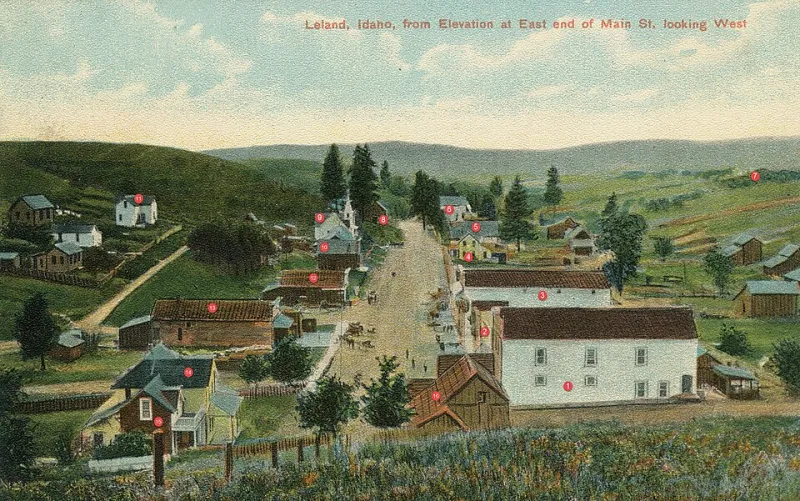
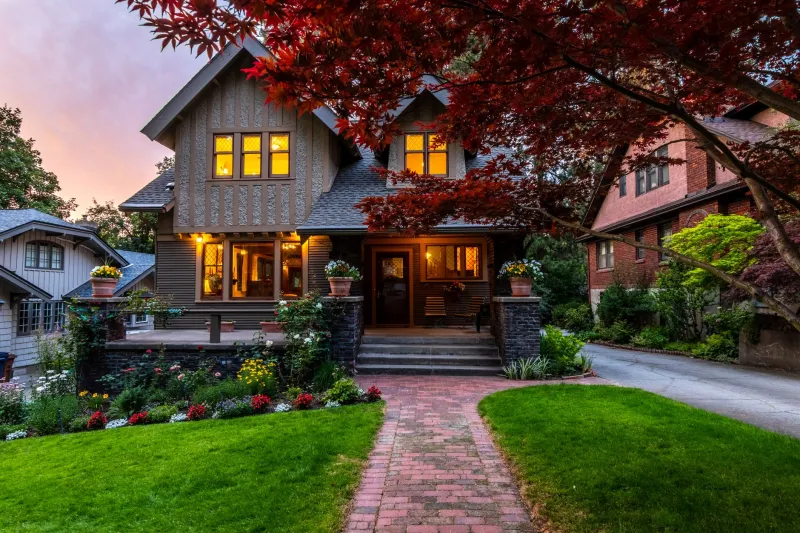
The physical design of mid-century American residential life made visibility almost unavoidable. Houses were built close to the street. Front porches weren't decorative — they were functional social platforms, occupied on warm evenings by people who waved at everyone who walked by and weren't embarrassed about it. Windows stayed open because air conditioning was either unavailable or unaffordable. Yards flowed into each other without barriers. The street itself was a shared living space, full of children and adults who knew each other by name, by habit, and by the particular texture of their daily lives.
What That Visibility Actually Did
Living in plain sight of your neighbors created something that social scientists now struggle to engineer artificially: genuine community accountability. When everyone can see what you're doing, certain behaviors become harder to sustain. Neglecting a child, mistreating a spouse, letting a property deteriorate — these things attracted attention, comment, and sometimes intervention in ways that were informal but real.
It also created a mutual aid network that required no organization because it was built into the architecture of daily life. If the widow on the corner hadn't picked up her mail in three days, someone noticed. If a family came home from the hospital to an empty refrigerator, someone knew and someone brought food. The help was sometimes intrusive and occasionally unwanted, but it was reliably present in a way that modern social services — however well-intentioned — rarely replicate.
Neighborhoods functioned as ecosystems of shared information. You knew which mechanic on the block could diagnose your car on a Saturday morning. You knew which grandmother had a remedy for whatever your kid had come down with. The collective knowledge of a tight residential community was practical and constantly available, passed around over fences and across porches without anyone thinking of it as particularly remarkable.
The Long Retreat Inward
The privacy revolution in American residential life didn't happen all at once. It was a gradual withdrawal, driven by forces that accumulated over several decades.
Air conditioning changed everything first. When houses could be cooled from inside, windows closed and porches emptied. The front porch gave way to the backyard deck — a shift from public-facing social space to private enclosure that seems minor and is actually enormous. People still gathered, but now they gathered behind the house, invisible from the street, in a space that required an invitation to enter.
Suburban expansion spread houses further apart and reduced the density that made casual daily contact natural. Car culture meant people moved through neighborhoods without stopping — from garage to street to destination and back, without the pedestrian friction that generates spontaneous conversation. Zoning decisions separated commercial and residential spaces, eliminating the corner stores and neighborhood taverns that had served as informal community gathering points.
Fences went up. Privacy laws tightened. The culture shifted toward an understanding of the home as a sealed personal domain rather than a node in a social network. By the 1990s, surveys were already showing that Americans knew dramatically fewer of their neighbors by name than their parents' generation had. By the 2010s, the trend had accelerated to the point where living next to someone for years without learning their last name had become entirely normal.
The Curated Self and the Closed Door
What replaced the transparent neighborhood wasn't nothing. It was something specific: the curated persona. Social media gave Americans a way to be selectively visible — to share what they chose, with whom they chose, in the form they chose. Instead of your neighbors witnessing your actual life in real time, you now broadcast a managed version of it to a chosen audience.
This is genuinely better in some ways. The old neighborhood visibility came with real costs. Gossip was often vicious. Social pressure to conform was intense and could be suffocating, particularly for anyone whose life didn't fit the dominant template — and in mid-century American neighborhoods, that template was narrow and enforced with some cruelty. Women trapped in bad marriages couldn't escape the neighborhood's gaze any more than they could escape the marriages. Gay Americans had nowhere to be themselves. The visibility that created community also created surveillance, and not everyone was equally protected by it.
The privacy that modern Americans have claimed is real freedom for many people who would have been crushed by the old system. That's not nothing.
The Thing We're Still Figuring Out
But loneliness statistics in America have been climbing for decades. Rates of depression, anxiety, and what researchers call "social isolation" have risen steadily even as — or perhaps because — people have gained more control over who sees them and when. The freedom to curate your own visibility turns out to carry a cost that wasn't obvious until we were already paying it.
The front porch didn't just expose you to judgment. It also made it nearly impossible to be alone in a bad way. Someone would notice. Someone would say something. The neighborhood, for all its intrusiveness, was a system that made it structurally difficult to disappear.
We traded that for fences and filtered feeds and the clean autonomy of the closed door. Most days, it feels like the right trade. Some days — when a week passes without a real conversation with someone who knows your actual life — it's harder to be sure.