The Four-Dollar Philosophers: When America's Barbershops Were Universities for Working Men
The Four-Dollar Philosophers: When America's Barbershops Were Universities for Working Men
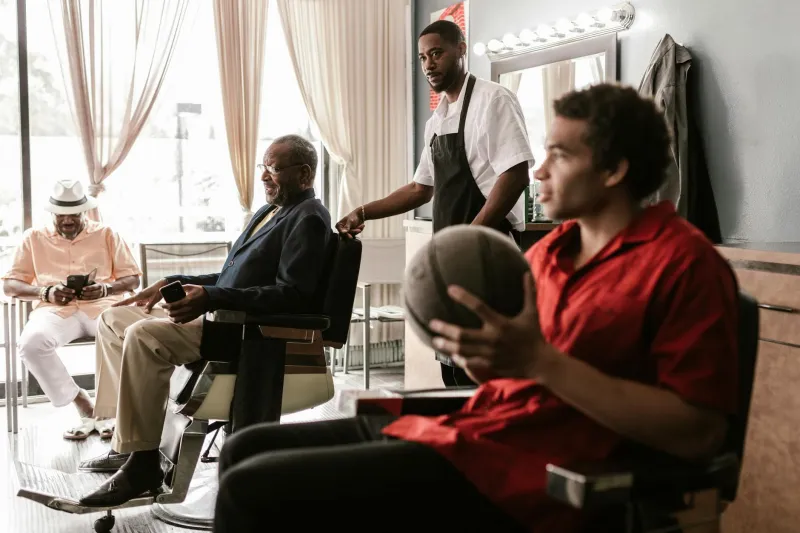
Every Tuesday at 3 PM, the same five men would settle into the cracked vinyl chairs at Sal's Barbershop on Maple Street. There was Tony from the auto plant, discussing union negotiations. Frank the mailman, sharing neighborhood gossip. Old Pete, retired from the railroad, dispensing wisdom about everything from marriage to municipal politics. And always, Sal himself—part barber, part therapist, part referee—keeping the conversation flowing as smoothly as his scissors.
 Photo: Sal's Barbershop, via sals-barbershop.com
This wasn't just a haircut appointment. It was democracy in action, four dollars at a time.
The Last Democratic Institution
American barbershops once served as the most egalitarian spaces in working-class neighborhoods. Unlike churches that divided by denomination, bars that excluded some, or country clubs that required membership, barbershops welcomed any man with four dollars and thirty minutes to spare.
The chairs held factory workers and shop owners, young fathers and widowed grandfathers, Democrats and Republicans, all united by the universal need for grooming and the human desire for conversation. Social hierarchies dissolved in those vinyl seats—a janitor's opinion carried the same weight as a bank manager's when discussing the local school board election.
These weren't planned forums or organized debates. They were organic gatherings where working men processed the world around them through shared dialogue. The barbershop provided what sociologists call "third space"—somewhere between home and work where community actually happened.
The Curriculum of Real Life
Conversations in traditional barbershops covered everything from sports scores to Supreme Court decisions, but they always circled back to practical wisdom. How to handle a difficult boss. Whether the new mayor could be trusted. Which mechanic wouldn't overcharge for brake work. The best way to discipline teenagers without breaking their spirit.
These discussions served as informal education for men who might never attend college but needed to navigate complex social and economic realities. Older customers shared hard-won knowledge about home ownership, career advancement, and family relationships. Younger men learned unspoken rules about workplace politics, neighborhood dynamics, and civic responsibility.
The barber himself often served as moderator and counselor. Sal Benedetto, who cut hair in Pittsburgh for forty-three years, described his role: "I wasn't just trimming whiskers. I was listening to guys work through problems, celebrate good news, and figure out how to be better husbands and fathers. Sometimes the best thing I could do was ask the right question and let the other customers provide the answers."
 Photo: Sal Benedetto, via king.ro
The Politics of the Common Man
Barbershops became unofficial polling places where working-class political opinions were formed, tested, and refined through debate. These weren't echo chambers—the mix of customers ensured multiple perspectives on every issue. Conversations might get heated, but they rarely became personal because everyone knew they'd be back next month.
The political education happened gradually, through repeated exposure to different viewpoints and the social pressure to defend opinions with facts rather than slogans. Men learned to listen respectfully, argue constructively, and find common ground on local issues even when they disagreed about national politics.
This grassroots political engagement created informed voters who understood how government decisions affected their daily lives. When the city council proposed new zoning laws, barbershop customers had already debated the implications for their neighborhoods. When school board elections approached, they knew which candidates understood working families' concerns.
The Grief and Glory Shared
Barbershops also served as spaces where men could process emotions that society otherwise discouraged them from expressing. When Tony lost his job at the plant, he spent an hour in Sal's chair talking through his fears about providing for his family. When Frank's son graduated from college—the first in their family—the celebration included everyone present.
These conversations provided emotional support that many working men couldn't find elsewhere. The ritual of the haircut created a safe space for vulnerability, while the presence of other customers ensured that personal problems were met with practical advice and community support.
Deaths, divorces, promotions, and pregnancies all became shared experiences in the barbershop. The regular customers formed an informal brotherhood that extended beyond the shop itself, creating networks of mutual aid that helped families weather economic hardships and personal crises.
The Great Silencing
Today's grooming industry operates on entirely different principles. Chain salons prioritize efficiency over conversation. Appointment apps eliminate waiting time that once facilitated spontaneous discussions. Many shops encourage customers to wear headphones or stare at phones rather than engage with fellow patrons.
The physical design of modern establishments actively discourages community interaction. Individual stations replace communal waiting areas. Noise from televisions and music drowns out conversation. Stylists focus on upselling products rather than facilitating discussion among customers.
Even traditional barbershops that survive often struggle to maintain their community function. Rising rents force them into strip malls rather than neighborhood locations. Younger customers prefer quick, silent service to extended conversations. The social expectations that once made barbershops democratic spaces have largely disappeared.
The Price of Efficiency
The transformation of barbershops from community centers to service providers reflects broader changes in American society. We've prioritized convenience over connection, efficiency over engagement, individual choice over collective experience.
Modern grooming services are undeniably superior in many ways. Online booking eliminates waiting. Professional stylists provide better cuts. Upscale salons offer amenities that old-fashioned barbershops never imagined. But these improvements came with hidden costs that extend far beyond the tip screen.
We lost spaces where working men could engage in political discourse without partisan rancor. We eliminated forums where practical wisdom passed between generations. We destroyed gathering places where neighborhood concerns became community action.
The Democratic Deficit
The decline of barbershop culture contributes to what political scientists call "democratic deficit"—the erosion of civic institutions that once connected citizens to public life. When working men lost their informal forums for political discussion, they became more susceptible to polarizing media and less engaged in local governance.
The absence of intergenerational conversation has particular consequences for civic knowledge. Young men no longer learn from older customers about how local government works, why certain politicians can be trusted, or how to effectively advocate for community needs. This knowledge gap weakens democratic participation and community problem-solving.
What Money Can't Buy
The four-dollar haircut purchased more than grooming—it bought membership in a community of practice where men learned to be citizens, neighbors, and leaders. The conversations that happened in those vinyl chairs created social capital that strengthened neighborhoods, informed voters, and supported families through difficult times.
No app can replicate the organic democracy of the traditional barbershop. No algorithm can facilitate the kind of cross-generational wisdom sharing that once happened naturally while waiting for a trim. No efficiency improvement can replace the human connections that made barbershops into universities for working men.
When we traded conversation for convenience, we didn't just change where men get haircuts. We eliminated one of America's last truly democratic institutions, where every voice mattered and every customer was a teacher and student simultaneously.
The chairs are still there in a few surviving shops, worn vinyl witnesses to conversations that shaped communities. But the voices have grown quiet, replaced by the soft glow of smartphone screens and the hollow efficiency of modern service culture.
Democracy, it turns out, needs more than polling places. It needs practice spaces where citizens learn to listen, debate, and find common ground. The barbershop provided that practice for generations of American men.
Now we'll have to learn democracy somewhere else.