When Your Grocer Was Your Neighbor: The Death of Shopping That Actually Cared
When Your Grocer Was Your Neighbor: The Death of Shopping That Actually Cared
Walk into any Target or Walmart today, and you'll find everything you need at prices that would have seemed impossible decades ago. Scan your items, tap your card, and walk out without speaking to a single human being. It's efficient, convenient, and completely soulless.
This wasn't always how Americans shopped.
The Store That Knew Your Story
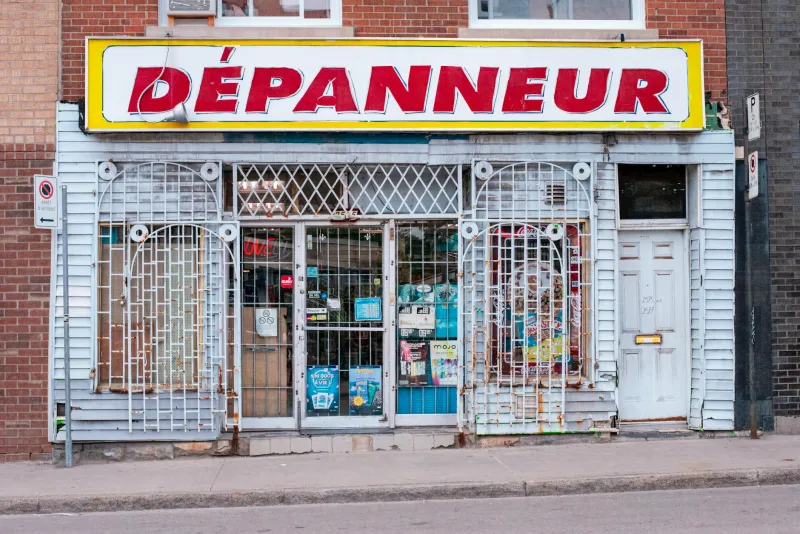
For most of the 20th century, the corner store was America's retail backbone. These weren't just places to buy bread and milk—they were community institutions run by families who lived in the neighborhoods they served.
Mr. Chen knew that Mrs. Rodriguez preferred her bananas slightly green because she bought them on Mondays for the week ahead. The Kowalski family at the corner market would set aside the Sunday paper for old Mr. Thompson, who walked with a cane and couldn't make it in early. When the Johnsons were between paychecks, they could grab groceries on Tuesday and settle up on Friday—no credit check required, just a handshake and twenty years of being neighbors.
This wasn't charity. It was business built on relationships that stretched across decades.
More Than Transactions
The corner store served functions that modern retail has never figured out how to replicate. These shops were information hubs where you'd learn that the Millers were expecting their third child, that Mrs. Patterson's husband was in the hospital, or that the city was planning to repave Elm Street next month.
Store owners became unofficial social workers, employment agencies, and community bulletin boards. They'd hire the teenager next door for weekend work, accept handwritten IOUs during the Great Depression, and stay open late during snowstorms because they knew people might need something.
The relationship went both ways. Customers felt genuine loyalty to "their" store, even if prices were slightly higher than the new supermarket across town. You didn't just shop there—you belonged there.
The Economics of Knowing Names
Running a corner store in 1950 meant operating on razor-thin margins, but the business model worked because of customer loyalty and community investment. Store owners typically lived above or behind their shops, keeping overhead low while staying connected to their customer base 24/7.
These weren't corporate franchises following standardized procedures. Each store reflected its owner's personality and its neighborhood's needs. A shop in Little Italy might stock specific imported olive oils, while one in a Polish neighborhood would carry fresh kielbasa and pierogi.
Inventory decisions were based on intimate knowledge of customer preferences, not algorithm-driven data analysis. If three regulars asked for a specific brand of coffee, it would appear on shelves the following week.
When Everything Changed
The shift began in the 1960s with the rise of suburban supermarkets and shopping centers. These new stores offered unprecedented variety, competitive prices, and the convenience of one-stop shopping. Why visit three different shops when you could get everything at Safeway?
The economics were undeniable. Chain stores could negotiate better wholesale prices, offer consistent quality, and provide amenities like air conditioning and ample parking. The corner store's personal touch couldn't compete with 20% lower prices on milk and bread.
By the 1980s, the transformation accelerated. Walmart's expansion strategy specifically targeted small-town retailers, often driving local competitors out of business within months of opening. The company's efficiency was impressive—and devastating to the communities it entered.
What We Gained and Lost
Today's retail landscape offers undeniable advantages. You can order groceries from your phone and have them delivered within hours. Walmart's prices have made basic necessities more affordable for millions of families. Target's design sensibility has elevated everyday shopping into something approaching entertainment.
But something fundamental disappeared in this evolution. Modern retail is designed around efficiency, not relationships. Self-checkout lanes eliminate human interaction entirely. Loyalty programs track your purchases but no human remembers your preferences. Customer service means calling a 1-800 number and explaining your problem to someone reading from a script.
The Attempt to Recreate Magic
Some retailers have tried to recapture the corner store's community feel. Whole Foods emphasizes local products and knowledgeable staff. Trader Joe's trains employees to chat with customers and remember regular shoppers. Small-town hardware stores still operate on the old model, where the owner can solve problems corporate chains wouldn't even understand.
But these efforts feel artificial compared to the genuine community investment of the traditional corner store. When the owner lives in your neighborhood, sends their kids to your schools, and shops at your church's bake sale, the relationship runs deeper than any customer service training can replicate.
The Social Cost of Efficiency
The death of the corner store represents more than a shift in retail—it marked the beginning of America's retreat from community-based commerce. When shopping became a transaction between strangers, we lost one of the daily interactions that bound neighborhoods together.
Young people today can't imagine a world where the person selling you milk knew your grandmother's maiden name and your father's favorite baseball team. They've never experienced the security of knowing that someone in the neighborhood was looking out for them, even in something as simple as a trip to buy candy.
We've gained incredible convenience and selection in our modern retail world. We've lost the irreplaceable feeling of walking into a store where somebody was genuinely glad to see you—not because corporate policy demanded it, but because you were neighbors.