When Words Carried Weight: The Lost Art of Letters That Actually Mattered
When Words Carried Weight: The Lost Art of Letters That Actually Mattered
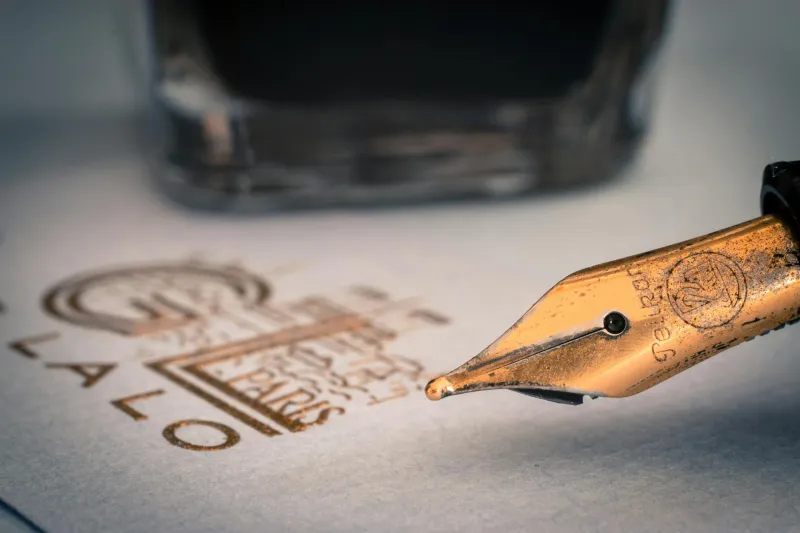
Sitting at a wooden desk with a fountain pen, your great-grandmother would spend an hour crafting a single letter to her sister three states away. She'd choose each word deliberately, knowing this piece of paper would carry her thoughts, hopes, and news for the next two weeks until it reached its destination. There were no delete buttons, no autocorrect, and definitely no "delivered" notifications.
Today, we fire off dozens of messages before lunch, each one forgotten moments after hitting send.
The Ritual of Real Communication
In 1950, writing a letter was an event. You'd pull out your best stationery, uncap your pen, and settle in for what felt like a conversation with someone miles away. The physical act demanded patience. If you made a mistake, you either lived with it or started over completely. This friction wasn't a bug—it was a feature that made every word count.
Americans wrote an average of 3-4 personal letters per week back then. Compare that to today's average of 121 text messages daily. The math tells a story: we've traded depth for speed, intention for impulse.
The letter-writing process created natural pauses for reflection. You'd set your pen down, think about what you really wanted to say, then continue. These moments of consideration meant letters often contained the kinds of vulnerable, honest thoughts that rarely surface in our rapid-fire digital conversations.
When Distance Made Hearts Grow Thoughtful
The two-week delivery window between major cities created a unique communication rhythm. You couldn't just dash off a quick "How are you?" and expect an immediate response. Instead, you packed everything into one substantial message: family updates, personal struggles, detailed descriptions of daily life, and genuine questions about the recipient's world.
Letters from this era read like time capsules. A 1955 letter from a Chicago mother to her daughter in California might span four pages, covering everything from the neighbor's new baby to detailed descriptions of last Sunday's pot roast dinner. These weren't just messages—they were literary snapshots of American life.
The anticipation was part of the magic. Families would gather around the mailbox, eager for news from distant relatives. The arrival of a letter was an event that could make or break someone's week. Compare that to today, where we get anxious if someone doesn't respond to our text within an hour.
The Economics of Emotion
A 3-cent stamp in 1950 (roughly 37 cents today) made you think twice about frivolous correspondence. This small cost created a filter that eliminated throwaway communication. You wouldn't waste postage on "What's for dinner?" or "Running late." Instead, letters carried weight—literally and figuratively.
This economic friction meant that when someone took the time and expense to write, the recipient knew they mattered. Every letter was proof that someone had carved out precious time from their day, invested in materials, and trusted the postal system with their thoughts.
What We Gained and Lost in Translation
Today's communication is undeniably more efficient. We can share news instantly, coordinate plans in real-time, and maintain connections across vast distances without thinking twice about cost or delivery time. During emergencies, this speed can be life-saving.
But efficiency came with hidden costs. Our messages have become disposable. We send quick reactions instead of thoughtful responses. The average text message contains just 7 words, compared to the 300-500 words typical in personal letters of the 1950s.
More troubling is how we've lost the art of sitting with our thoughts before sharing them. The immediate nature of modern communication encourages reactive rather than reflective responses. We've optimized for speed but sacrificed the kind of deep consideration that once characterized American correspondence.
The Handwriting on the Wall
Perhaps the most significant loss is physical. Handwritten letters were tangible proof of someone's attention. The curves of familiar handwriting, the slight smudge of ink, the choice of paper—all of these details conveyed emotion beyond words. Many Americans still treasure boxes of old letters from deceased relatives, but how many of us save screenshots of text conversations?
The permanence of letters also created accountability. Once you sealed that envelope, your words were committed. There was no editing history, no deleting embarrassing messages. This permanence encouraged more careful, honest communication.
Finding Our Way Back
We can't return to a two-week delivery world, nor would most of us want to give up the convenience of instant communication. But understanding what we've lost might help us be more intentional about how we connect.
The next time you want to share something meaningful with someone you care about, consider the letter-writer's approach: pause, reflect, and choose your words as if they'll be read and reread for years to come. Because in a world drowning in forgettable messages, the ones crafted with care still rise above the noise.
After all, when was the last time you received a message that you wanted to keep forever?