When Voices Mattered More Than Typing: The Death of America's Conversation Culture
The Sacred Ring of Connection
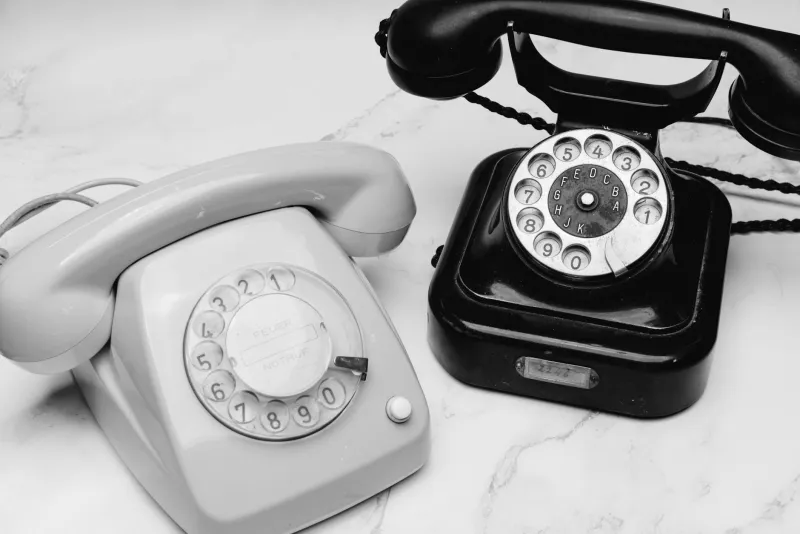
There's a sound that once ruled American homes: the sharp, insistent ring of a landline telephone. When that phone rang, everything stopped. Dinner conversations paused mid-sentence. TV volumes dropped to whispers. Someone always answered—because ignoring a ringing phone wasn't just rude, it was unthinkable.
That world feels like ancient history now, but it was our reality just twenty-five years ago. Back then, if you wanted to talk to someone, you picked up the phone and dialed their number. No typing. No emojis. No "seen at 3:47 PM" timestamps haunting your conversations. Just two voices, connected by copper wires and genuine intention.
When Distance Had a Price Tag
Long-distance calls in the 1980s and 1990s weren't casual affairs. They cost real money—sometimes dollars per minute—which meant every word carried weight. Families planned their Sunday calls to grandparents like military operations, gathering everyone around the kitchen phone to maximize those precious, expensive minutes.
"I love you" at the end of a long-distance call wasn't just sentiment—it was a financial commitment. When you paid $1.50 per minute to hear someone's voice, you didn't waste time on small talk about the weather. You got straight to what mattered: How are you really doing? When will I see you again? Tell me something that matters.
Today, we can video chat with someone in Tokyo for free, yet somehow our conversations have become more shallow than ever. We've gained infinite connection but lost the art of making it count.
The Ritual of Telephone Intimacy
Remember the physical choreography of phone conversations? Stretching that coiled cord as far as it would go, wrapping it around your finger while you talked. Finding that perfect spot in the house where you could lean against the wall and settle in for a real conversation. Some people had their "phone voice"—a slightly different version of themselves that emerged only during calls.
Teenagers would tie up the family line for hours, much to their parents' frustration. But those marathon conversations built something that today's rapid-fire text exchanges can't replicate: genuine intimacy through sustained attention. When you committed to a phone call, you were truly present with that person. No multitasking. No scrolling through other conversations. Just two people, sharing space in the most fundamental way possible—through voice.
The Death of Spontaneous Connection
Here's what we lost when texting took over: the beautiful unpredictability of human voices. Every phone call was a small adventure. You never knew what mood someone would be in, what story they'd tell, or how long you'd end up talking. Conversations had natural rhythms, unexpected turns, comfortable silences that said as much as words.
Now we curate our communications like museum exhibits. We craft the perfect text, delete and retype, add the right emoji to convey the exact tone we want. Everything is edited, sanitized, and stripped of the messy humanity that made phone calls so real.
When someone calls unexpectedly today, our first instinct is often annoyance rather than curiosity. "Why didn't they just text?" we wonder, as if hearing someone's actual voice has become an imposition rather than a gift.
The Awkward Art We've Forgotten
Most Americans under 30 now experience genuine anxiety when making phone calls. They'll order food through apps rather than call a restaurant. They'll text their boss instead of picking up the phone. The simple act of dialing a number and speaking to another human being has become a skill we're actively losing.
This isn't just about technology—it's about intimacy. Phone calls required vulnerability in a way that texts don't. Your voice revealed your mood, your energy, your genuine self in ways that carefully chosen words and emoji never could. You couldn't hide behind perfect punctuation or strategic delays in responding. You were just there, present and human, with all the beautiful messiness that entailed.
What Silence Used to Sound Like
Perhaps most tellingly, we've lost the art of comfortable silence. Phone conversations naturally had pauses—moments to think, breathe, exist together without filling every second with noise. Those silences weren't awkward; they were intimate. They said, "I'm here with you, even when neither of us is talking."
Today's communication is all about immediate response. Read receipts create pressure to reply instantly. Typing indicators show when someone is composing a message, eliminating the mystery of response time. We've optimized human connection for efficiency, but efficiency was never the point of connection in the first place.
The Echo of What We've Lost
America didn't just lose a communication method when phone calls faded—we lost a way of being together. We traded the warmth of voices for the convenience of keyboards, the unpredictability of real conversation for the control of edited text. We gained speed and lost soul.
The next time your phone actually rings with a voice call, try answering it. Not because you have to, but because somewhere in that simple act of picking up and saying "hello," there's an echo of the America we used to be—one where voices mattered more than convenience, and connection meant more than just staying in touch.