The Happy Accident: When Finding Something New Meant Getting Wonderfully Lost First
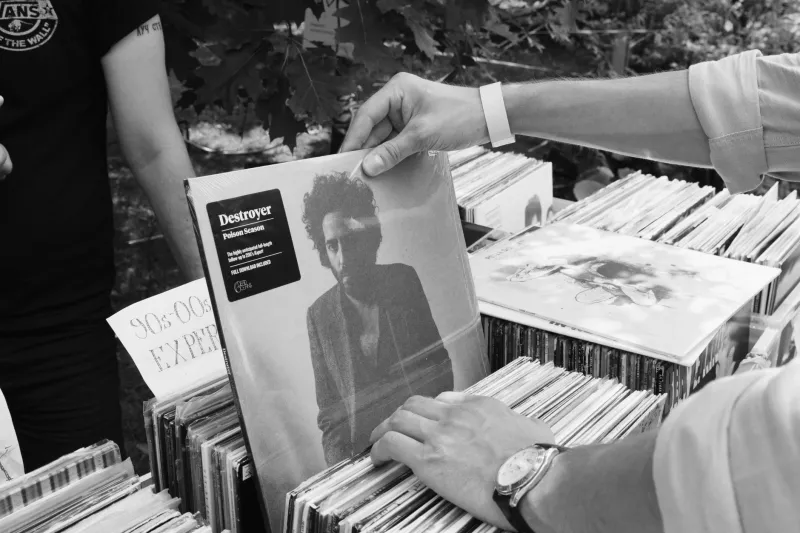
In 1994, a college student in Austin wandered into a record store on a Tuesday afternoon looking for nothing in particular. She flipped through bins for an hour, pulled out an album because the cover looked interesting, listened to thirty seconds at the listening station, and bought it on a gut feeling. That album became her favorite record of the decade. She'd never heard of the artist before. Nobody had recommended it. No algorithm had surfaced it. She just found it, the way you find a $20 bill in an old jacket.
That experience — the accidental discovery, the stumble, the happy detour — is nearly extinct. And we should probably talk about what we lost when it disappeared.
The Infrastructure of Serendipity
For most of the 20th century, discovery was fundamentally inefficient, and that inefficiency was the whole point. Music came through the radio, which played what the DJ chose, which meant you heard things you never would have sought out. Books came through libraries and bookstores, where the physical act of browsing meant your eyes landed on spines you weren't looking for. Restaurants got discovered because you drove down an unfamiliar street and something looked good through the window.
Word of mouth was the original recommendation engine, and it was gloriously imprecise. Your coworker told you about a Thai place in a strip mall that you wouldn't have found on your own. Your uncle lent you a novel he thought you'd probably hate but figured you should read anyway. A friend made you sit through a movie you were skeptical of, and it became something you still think about.
None of this was targeted. None of it was personalized. It was just life, with its random collisions and accidental introductions, doing what life does.
When Wandering Was the Method
Travel used to be the ultimate serendipity machine. You drove somewhere without a detailed plan, took a wrong turn, and found a diner that became the best meal of the trip. You walked into a town you'd never heard of because it appeared on a hand-drawn map and turned out to have a history worth three hours of exploration. The detour wasn't a failure of navigation — it was the whole adventure.
Even within cities, people wandered. You went to a neighborhood you didn't know, walked until something caught your attention, ducked into a shop or a café because it looked interesting from the sidewalk. Discovery was physical. It required presence and movement and a willingness to not already know where you were going.
That kind of wandering still happens, but it increasingly happens within a framework. We check Yelp before we walk through the door. We read TripAdvisor before we book the hotel. We look at Google Street View before we arrive somewhere. The surprise has been largely pre-empted by research, and the research is largely driven by other people's prior experiences rather than our own developing instincts.
The Algorithm's Bargain
The personalized recommendation system offered something genuinely appealing: efficiency. Spotify would show you music similar to what you already liked. Netflix would surface movies that matched your viewing history. Amazon would suggest books based on what people like you had bought. The promise was that you'd spend less time searching and more time enjoying.
And it delivered on that promise. Most people find things they genuinely like through algorithmic recommendations. The system works, by its own definition of working.
But there's a catch built into the design. Algorithms optimize for engagement, which means they optimize for the familiar. They show you more of what you already respond to, because that's what keeps you on the platform. The result is a kind of cultural narrowing — your taste gets reinforced rather than challenged, your existing preferences get amplified rather than expanded.
The record store browser in 1994 got exposed to genres she didn't know she liked. The algorithm user in 2024 gets served a more refined version of what she already chose last week. One of those experiences changes you. The other confirms you.
What We've Stopped Bumping Into
There's a specific kind of intellectual and cultural growth that only happens through exposure to things outside your preference profile. The book you were certain you'd hate but read anyway because someone insisted. The band you dismissed until you heard them live by accident at a festival. The neighborhood you avoided until a wrong turn made you walk through it.
Those encounters don't just broaden taste — they expand the frame through which you see the world. They introduce you to people and ideas and aesthetics that exist outside your existing map. And you can't plan for them, because the moment you plan for them, they become something else.
The algorithm, by design, doesn't do this. It doesn't know what you don't know you'd love. It only knows what you've already signaled interest in, and it works backward from there.
Getting Intentionally Lost
Some people are deliberately building serendipity back in. They listen to radio stations they don't control. They browse physical bookstores with no particular title in mind. They drive to unfamiliar towns on weekend afternoons with no agenda. They ask friends for recommendations with the explicit instruction: something you think I'd probably resist.
It feels counterintuitive in an era where friction is the enemy of the user experience. But friction, it turns out, is sometimes where the good stuff lives.
The algorithm knows you. That's both its power and its limitation. It knows what you've been — not what you might become if something unexpected got through.