From Shoebox to Safe Deposit Box: The Day Collecting Stopped Being Fun
From Shoebox to Safe Deposit Box: The Day Collecting Stopped Being Fun
Somewhere in America right now, a 9-year-old is opening a pack of trading cards. The cardboard smell hits. The foil wrapper crinkles. And then — before they've even had a chance to feel anything about what's inside — an adult nearby is already reaching for their phone to check the card's current market value.
That moment, mundane as it sounds, captures something important about what happened to collecting in this country. A pastime that once lived entirely in the realm of childhood delight has been absorbed, almost completely, into the logic of financial speculation. And the transformation happened faster than most people realize.
The Shoebox Economy
Go back to the 1950s, 60s, and 70s, and the world of American collectibles looks almost unrecognizable from today's vantage point. Kids collected baseball cards because they liked baseball. Comic books got read, re-read, rolled up, and stuffed into back pockets. A good card was one that featured your favorite player — not one with a particular print run or surface grade.
Trading was the whole point. You'd spread your duplicates out on a friend's bedroom floor and negotiate. A Willie Mays for two mid-tier infielders. A near-mint Carl Yastrzemski for three commons and a handshake. Value was entirely personal and entirely social. Nobody was consulting a price guide before making a deal.
The cards themselves were everywhere and cheap. A pack of Topps baseball cards in 1975 cost fifteen cents. A full wax box could be had for a few dollars. The financial stakes were so low that kids didn't think twice about clothes-pinning a card to their bike frame to get that satisfying clicking sound against the spokes. The card's worth was the sound it made. That was enough.
The First Crack in the Foundation
The shift started subtly in the 1980s. Price guides began circulating — publications like Beckett Baseball Card Monthly, launched in 1984, gave collectors a standardized way to assess card values. That was genuinely useful for serious adult hobbyists. But it also introduced something new into the culture: the idea that every card had an objective monetary value independent of how much you personally liked it.
Then the market exploded. The late 1980s and early 1990s saw a full-blown speculative bubble in sports cards. Card shops opened in every strip mall. Parents started buying cards not for their kids but as investments, convinced that a factory-sealed case of 1989 Upper Deck Ken Griffey Jr. rookies would fund a college education. Production volumes skyrocketed as manufacturers tried to meet demand, which ultimately flooded the market and crashed prices for most cards. Many people who bought in during the boom lost real money.
But the mentality — cards as financial instruments — had already taken root.
Grading Changes the Game Permanently
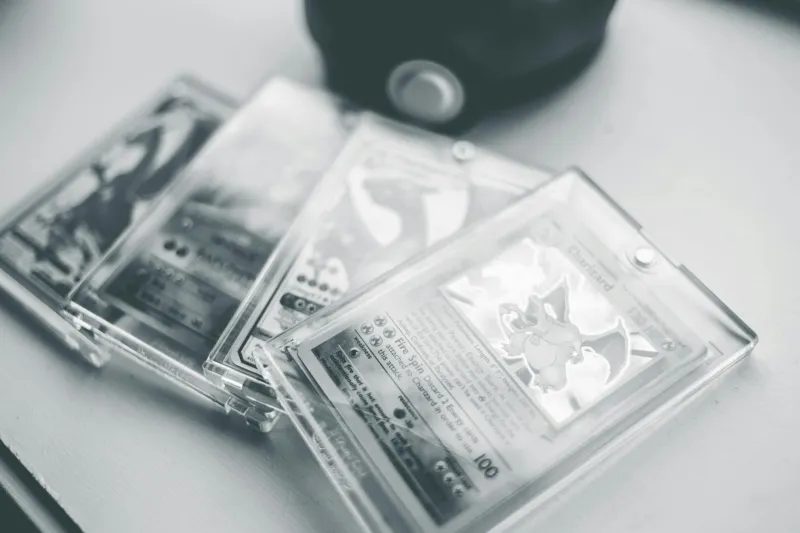
The single development that most transformed the collectibles landscape was the rise of professional grading services, particularly PSA (Professional Sports Authenticator), founded in 1991. The concept was straightforward: submit a card, have experts assess its condition on a scale of 1 to 10, and receive it back sealed in a hard plastic case with an official grade printed on the label.
For authentication and high-end transactions, grading made sense. But it also did something more profound: it turned subjective, personal objects into standardized financial instruments. A PSA 10 is a PSA 10 whether it's a 1909 Honus Wagner or a 2017 Shohei Ohtani rookie. The grade becomes the product. The card inside is almost secondary.
Today, PSA alone has graded over 50 million items. Collectors routinely spend more on grading fees than the cards themselves are worth — on the off chance something comes back as a high-grade gem. People buy cards they've never seen in person and may never physically handle, because the slab and the grade are what they're actually purchasing.
Pokémon and the Speculative Peak
If baseball cards were the first wave, Pokémon became the moment the broader American public realized collectibles had gone fully financial. During the pandemic, with people stuck at home, flush with stimulus money, and starved for entertainment, the Pokémon card market went vertical.
A first-edition holographic Charizard — the kind of card that a 10-year-old in 1999 might have treasured, traded, or accidentally bent — sold at auction in 2021 for $420,000. A PSA 10 Pikachu Illustrator card went for $5.275 million. YouTube channels dedicated to opening vintage packs accumulated millions of subscribers. Logan Paul wore a Pokémon card to WrestleMania.
The market wasn't being driven by people who loved Pokémon. It was being driven by speculators who recognized a liquid asset class with emotional resonance and limited supply. The childhood nostalgia was essentially the marketing department.
What the Market Ate
The downstream effects on actual hobbyists — people who collect because they genuinely love the items — have been significant. Vintage comic books that used to be accessible to serious fans now command prices that put them firmly in the category of fine art purchases. A high-grade copy of Amazing Fantasy #15, the first appearance of Spider-Man, sold for $3.6 million in 2021. First-edition books, vintage toys, rare sneakers, sports memorabilia — almost every category of American collectibles has experienced the same financialization.
The irony is that the things being traded for millions of dollars were originally created as disposable entertainment for children. A baseball card was a piece of cardboard meant to be held by a kid. A comic book was designed to be read until it fell apart. The entire original value proposition was use, not preservation.
Now the most valuable versions of these objects are the ones that were never used at all.
Can Anything Just Be Fun?
There's a real question buried in all of this: does financialization ruin the thing itself? When every card pack opening becomes a potential lottery ticket, does the joy of the hobby survive?
For some collectors, the answer is yes — they've found ways to participate in the hobby purely on their own terms, ignoring market values entirely. But the culture around collecting has undeniably shifted. Online communities that used to trade knowledge and enthusiasm now trade price alerts and grading speculation. Kids opening packs on YouTube are performing for an audience that's watching for the money pull, not the moment of discovery.
The shoebox under the bed has been replaced by the hermetically sealed slab in the fireproof safe. The baseball card in the bike spokes is now considered an act of vandalism against a potential asset.
Something was lost in that translation. It's just harder to put a price on it.