One Question, Three Weeks: The Remarkable Effort It Used to Take to Learn Anything

Photo by Photo by Ilya Semenov on Unsplash on Unsplash
Suppose it's 1962 and you're arguing at the dinner table about the length of the Panama Canal. There is exactly one way to settle it: somebody has to go find out.
That sentence — somebody has to go find out — describes an entire vanished world.
The Expedition Behind Every Answer
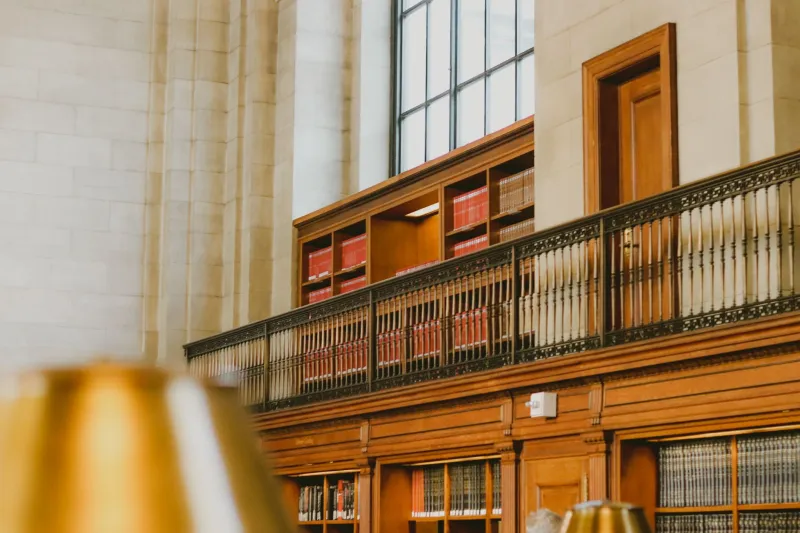
The first stop was the library, which meant getting there. In car-light households, that was a walk, a bus, or a favor. Once inside, you faced the card catalog: a wall of wooden drawers holding thousands of index cards, organized by an exacting logic you had to learn. Find the right drawer, the right card, the right call number, and then — only then — go locate the actual book on the actual shelf, assuming it wasn't checked out.
If the answer lived in a periodical rather than a book, you moved to the microfiche machine: a hulking reader that blew newspaper pages up onto a screen, which you cranked through page by page like a very slow, very dry film.
And if your small-town branch didn't have the answer at all? The librarian would place an interlibrary loan request. Your question would travel by mail to a larger system, and the book might arrive in two or three weeks. People genuinely waited that long. They planned around it.
Kids absorbed this lesson early. A school report wasn't a search; it was a small research project, complete with bibliography, and the encyclopedia on the family shelf — purchased in volumes, A through Z, over years — was often the entire reference section of the household.
The Great Compression
Then the whole apparatus collapsed into a rectangle in your pocket. First came search engines, which shrank a library trip to a typing exercise. Then Wikipedia made the encyclopedia feel quaint. And now AI assistants will answer the Panama Canal question in plain English, in four seconds, with follow-ups offered unprompted.
The friction didn't just shrink. It vanished. Nobody waits three weeks for an answer anymore, and honestly, nobody should. The democratization here is enormous and real: the kid in a rural town now has access to information that once required a university library card.
Did Instant Answers Make Us Shallower?
Here's the uncomfortable part. Researchers have studied what happens when answers become effortless, and the pattern is consistent: we remember less of what we look up, because the brain outsources storage when retrieval is cheap. Psychologists call it the Google effect. If you know the answer is always one tap away, your mind quietly declines to hold onto it.
The old friction, it turns out, was doing invisible work. The walk to the library was a filter that separated the casually curious from the genuinely determined. The card catalog taught systematic thinking. The three-week wait built anticipation — and anticipation is where curiosity lives.
There's also a difference between retrieving an answer and understanding a subject. The library was slow, but slowness forced depth: you'd read three chapters to find one fact, and along the way you'd absorb the surrounding territory. Today's instant answers can leave us fluent in fragments and strangers to context.
What the Chatbot Can't Do
None of this is an argument for nostalgia. The card catalog served the patient and shut out everyone else, and the microfiche machine served no one gracefully. The arc from catalog to chatbot is, on balance, one of the great liberations in the history of learning.
But the lesson worth carrying forward is that effort and learning were never enemies — they were partners. The tool changed. The discipline didn't have to. The people who learned the most in 1962 weren't the ones with the best library access. They were the ones willing to keep asking after the first answer came back.
That part hasn't changed at all. The chatbot will give you the length of the Panama Canal in four seconds. Whether you care enough to ask a second question is still, as it always was, entirely up to you.