The Woman at the Desk Who Already Knew What You Were Looking For
Her name was probably Margaret, or Dorothy, or something equally solid and unhurried. She sat behind a desk that smelled faintly of rubber stamps and old paper, and she had an uncanny ability to look up from whatever she was doing, clock the kid wandering the stacks with no particular destination, and say something like: "You finished the Narnia books? Come here. I want to show you something."
She wasn't running a recommendation algorithm. She was paying attention.
The Library as Living Map
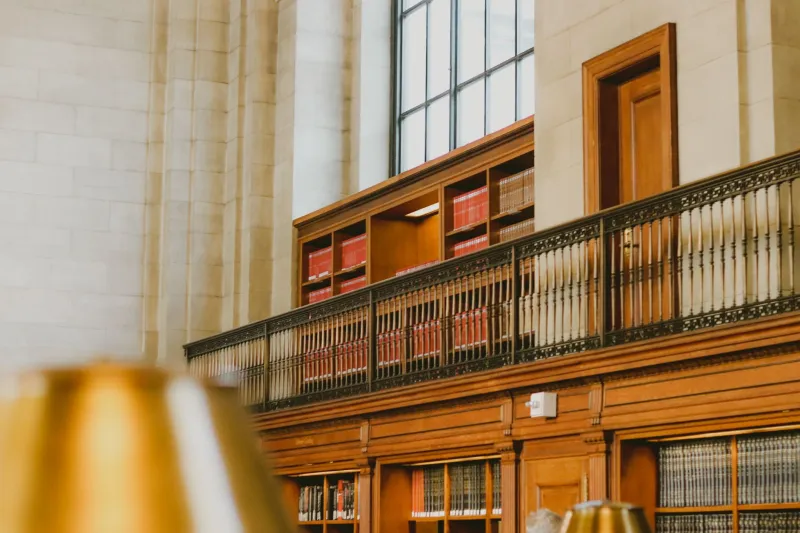
For most of the 20th century, the public library was one of the great equalizing institutions in American life. It didn't matter if you grew up in a house full of books or a house with none — walk through those doors and the entire recorded output of human civilization was available to you, free of charge, organized by a system you could learn in an afternoon.
But the system itself was only part of it. The real secret weapon was the librarian.
These were people who had read widely and catalogued their knowledge of patrons with the same quiet precision they applied to the Dewey Decimal System. They remembered that you'd been on a World War II kick for three months. They noticed when you graduated from picture books to chapter books. They knew, somehow, that the shy teenager who always sat in the back corner would respond to Ray Bradbury in a way she hadn't responded to anything else.
This wasn't magic. It was sustained human attention — the kind that builds up over months and years of small interactions into something genuinely useful. The recommendation wasn't generated by analyzing your checkout history against a database of 40 million users. It came from a person who had watched you grow up.
And then there was the shelf itself. The beautiful, anarchic, serendipitous shelf.
Getting Lost Was the Whole Point
Anyone who spent real time in a library before the internet will tell you about the moment. You went in looking for one thing and left with something completely different. You pulled a spine because the title was strange, or the cover was striking, or it was wedged next to the book you actually wanted and the first page caught you before you could put it down.
This is how a lot of people found their favorite authors. Not through a recommendation, not through a friend's suggestion, but through pure geographic accident — the fact that two books happened to share a shelf because their authors' last names both started with K.
Readers who discovered their literary tastes this way often describe it as formative in a way that goes beyond just finding good books. The experience of wandering without a destination, of being surprised by something you didn't know you wanted, shaped how they thought about curiosity itself. You learned that the best things weren't always the things you went looking for.
Enter the Algorithm
Today, the dominant model for book discovery is the recommendation engine. Amazon tells you what readers of your last purchase also bought. Goodreads generates lists based on your ratings history. Spotify's Discover Weekly — while technically for music — trained an entire generation to expect that a platform would curate their taste for them. Audible. BookTok. The New York Times bestseller list surfaced through a targeted Facebook ad.
None of this is bad, exactly. The recommendation engine is genuinely useful. If you loved Educated by Tara Westover, there's a reasonable chance you'll also love The Glass Castle, and having that surfaced for you saves time. Efficiency has real value.
But here's what the algorithm fundamentally cannot do: it cannot recommend something you wouldn't already like.
That sounds like a small thing. It isn't. The algorithm is, by design, an optimization machine. It is trying to maximize the probability that you'll enjoy what it suggests, which means it is constantly steering you toward the familiar — the same genre, the same emotional register, the same approximate reading level as the last thing you rated highly. It is brilliant at giving you more of what you already are. It is structurally incapable of introducing you to what you might become.
The librarian who handed a teenager a Bradbury novel wasn't optimizing for the teenager's existing preferences. She was making a bet on who that teenager could be.
What the Data Misses
There's a concept in information science called a "filter bubble" — the idea that algorithmic curation creates an increasingly narrow loop of content that reflects and reinforces your existing worldview. The term was coined in a political context, but it applies equally to books, music, film, and ideas.
When your reading life is entirely shaped by what an algorithm thinks you'll enjoy, you stop encountering the book that challenges your assumptions, the author whose politics unsettle you in productive ways, the genre you wrote off at seventeen that you'd actually love at thirty-four. The edges of your intellectual world quietly contract, and you don't notice because you're perfectly happy inside the loop.
The library stacks had no such agenda. They were indifferent to your preferences in the best possible way. They contained everything, organized by a logic that had nothing to do with your personal data, and they invited you to wander.
The Librarians Are Still There
Here's the part worth holding onto: the librarians haven't disappeared. American public libraries still employ over 150,000 credentialed library staff, and many of them are doing extraordinary work — running community programs, navigating complex reference requests, and yes, still making personalized reading recommendations to anyone who asks.
The problem isn't that the expertise is gone. It's that fewer people walk through the door to access it. When the algorithm is faster and the couch is more comfortable, the library becomes a last resort rather than a first instinct.
But for the readers who still go — who still pull a random spine off a shelf and give the first page a chance — the magic is intact. The serendipity is still there, waiting. You just have to show up without knowing what you're looking for.