The Doctor Who Knew Your Dog's Name: How American Healthcare Traded Relationship for Efficiency
The Doctor Who Knew Your Dog's Name: How American Healthcare Traded Relationship for Efficiency
Picture this: it's 1955, and your kid wakes up with a fever and a bad cough. You call Dr. Henderson — the same man who delivered your youngest, treated your mother's arthritis, and once stayed past midnight with your father during a health scare. Within a couple of hours, he's at your front door, black bag in hand, sitting at the kitchen table, taking his time.
He doesn't have a waiting room full of patients checking their phones. He doesn't have an electronic records system timing his visit. He just has you, your kid, and forty years of knowing this family.
That scene isn't fiction. For millions of Americans through the mid-20th century, it was just Tuesday.
The House Call Was Real — and Surprisingly Common
At the peak of the house call era, roughly 40 percent of all doctor-patient interactions in the United States happened in the patient's home. Physicians built their practices around neighborhoods. They knew not just their patients, but their patients' families, their stress levels, their diets, their living conditions. Medicine was personal in a way that's genuinely hard to conceptualize now.
The family doctor of that era was a generalist by necessity. He handled births, broken bones, chronic illness, mental health, and end-of-life care — often for the same families across multiple generations. He wasn't a specialist. He was a presence. And that presence came with a kind of continuity that shaped how care was actually delivered.
When your doctor has watched you age for 20 years, he notices things. He knows what your normal looks like. He catches the subtle shift before it becomes a crisis. That longitudinal knowledge is one of the most underappreciated tools in medicine — and it's one of the first things that got quietly dismantled as the system modernized.
What Changed Everything
The transformation didn't happen overnight, and it wasn't driven by any single decision. A few forces converged.
The rise of employer-sponsored health insurance after World War II gradually shifted the economic logic of medicine. Reimbursement structures began to reward procedures and specialist visits over time-intensive primary care. A cardiologist who performs a procedure gets paid far more than a family doctor who spends an hour talking through a patient's anxiety and lifestyle. Over decades, that financial signal shaped where medical students chose to specialize — and it wasn't general practice.
At the same time, medicine itself became dramatically more sophisticated. The explosion of specialization through the latter half of the 20th century meant that treating complex conditions required teams of experts rather than a single generalist. That's genuinely good news for patients with serious diagnoses. The survival rates for conditions that were once death sentences — certain cancers, heart disease, HIV — are almost incomparably better today than they were in the golden age of the house call.
But specialization came with fragmentation. Instead of one doctor who knows everything about you, you might have five doctors who each know a lot about one part of you — and who may never speak to each other.
The Waiting Room Arithmetic
Here's a number that lands hard: the average primary care physician in the US today manages a patient panel of somewhere between 1,500 and 2,500 people. If you do the math on a 40-hour work week with no vacation, that's physically impossible to manage with any meaningful depth of relationship. Something has to give — and what gives is time.
Studies have found that the average American doctor's appointment lasts around 17 minutes. In that window, a physician is expected to review your history, address your concerns, order any necessary tests, update your records, handle billing codes, and comply with a growing list of administrative requirements. The actual conversation — the part where you describe what's been worrying you — often gets compressed into the first few minutes.
Meanwhile, getting to that 17-minute appointment can take weeks. The average wait time for a new patient to see a primary care doctor in the US is currently around 26 days in most major cities. In some regions, it stretches considerably longer.
The house call, in this context, seems not just nostalgic but almost science fiction.
Technology Gave and Technology Took
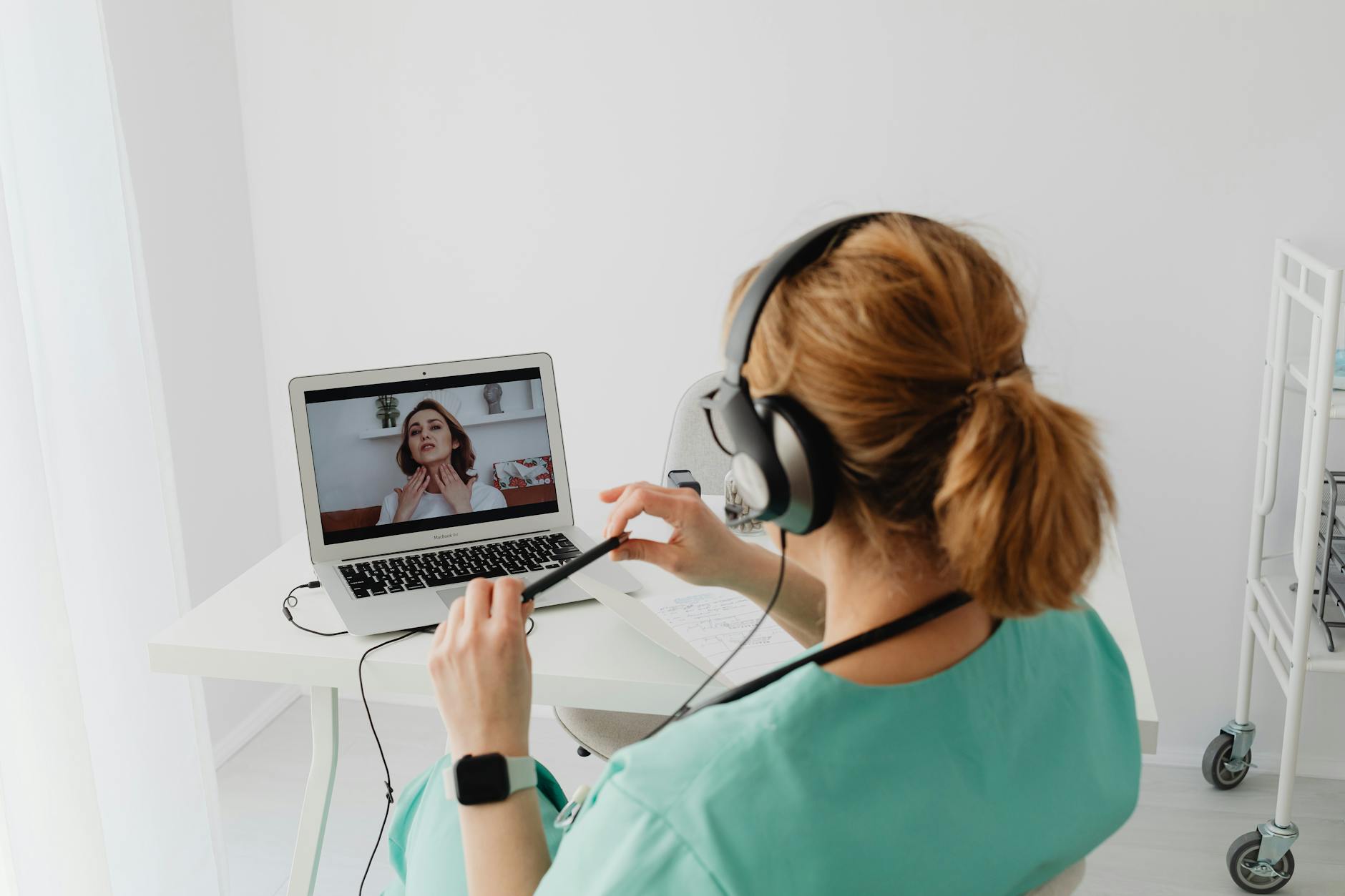
It would be unfair to frame this purely as decline. Telemedicine — accelerated dramatically by the pandemic — has reintroduced something that vaguely resembles the accessibility of the old model. You can now video-call a physician from your couch, often within hours. That's genuinely useful for a lot of situations.
Electronic health records mean your information travels with you. Diagnostic tools available today would have seemed miraculous to a mid-century physician. The average American lives significantly longer than their grandparents did, and much of that is attributable to the very medical advances that reshaped the system.
But technology also introduced new friction. Doctors spend an estimated two hours on administrative tasks — entering data, managing records, handling prior authorizations — for every one hour of direct patient care. A 2019 study found that physicians were experiencing burnout at rates far exceeding other professions. The human beings delivering the care are, in many cases, just as ground down by the system as the patients navigating it.
What We're Still Figuring Out
The American healthcare system is extraordinary at acute, high-stakes intervention. If you have a heart attack, a serious infection, or a complex surgical need, you are — on average — in better hands today than at any point in human history.
What it's less good at is the slower, relational work of knowing a person over time. The kind of knowing that catches things early. The kind that makes a patient feel like more than a chart number. The kind that used to arrive at your front door with a black bag and enough time to sit down.
Somewhere in the gap between those two versions of medicine is a question worth sitting with: what do we actually want from the people who take care of us? Efficiency and expertise, absolutely. But maybe also something that looks a little more like being known.