The Garage Door Closed and the Neighborhood Disappeared
The Garage Door Closed and the Neighborhood Disappeared
There's a particular sound that used to define American residential life. Screen doors slapping shut. Kids yelling across lawns. The low murmur of adults talking on porches while the evening cooled down. If you grew up before the mid-1990s, you probably don't even realize how much of your childhood soundtrack was just neighbors — their voices, their lawnmowers, their arguments, their laughter drifting through open windows.
Now think about the last time you had an actual conversation with the person who lives next door. Not a wave. Not a polite nod at the mailbox. A real conversation.
For a lot of Americans, that memory is either distant or nonexistent.
When the Street Was the Social Network
In mid-century America — roughly the 1940s through the 1970s — neighborhoods functioned as genuine communities in a way that's hard to fully appreciate today. Suburban streets in places like Levittown, New York, or Park Forest, Illinois, weren't just housing arrangements. They were social ecosystems.
Families shared tools without a second thought. Casseroles appeared on doorsteps after a birth or a death. Kids moved between houses so freely that multiple sets of parents knew where everyone was at any given moment, even without a single text message. Front porches weren't decorative — they were the original social media feed, the place where you caught up on everything happening within a three-block radius.
Neighborhood life had structure to it. Block parties were a genuine institution. Fourth of July cookouts spilled across property lines. In smaller towns, the boundaries between private and communal space were almost philosophical — people treated the street itself as shared territory, not just a strip of asphalt to drive across.
None of this was perfect. Mid-century neighborhoods were often deeply exclusionary, shaped by redlining, racial covenants, and rigid social expectations. But the architecture of connection — the physical and cultural setup that made casual daily contact inevitable — was real.
How the Design Changed Everything
The drift away from neighborhood life didn't happen because Americans suddenly became antisocial. It happened because the environment changed in ways that quietly rewired daily behavior.
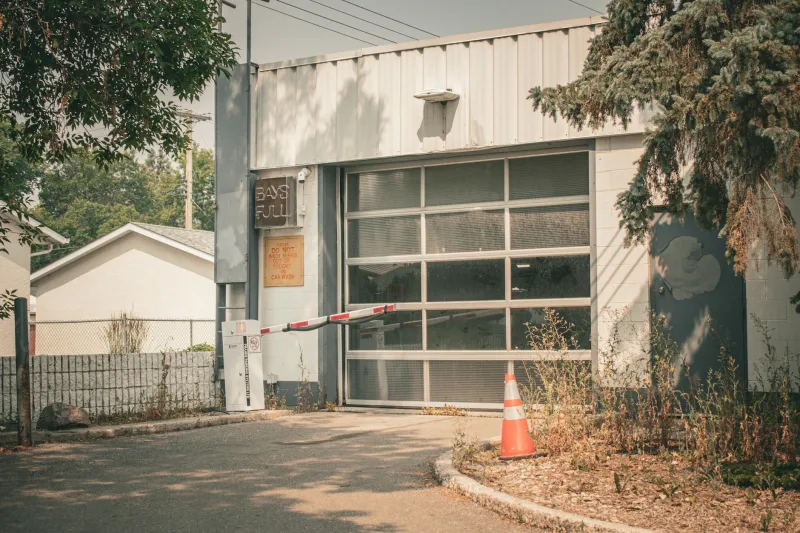
The attached garage might be the single most underappreciated force in the collapse of neighborhood connection. When houses started being built with garages that opened directly into the home, the daily ritual of walking out the front door — and therefore running into people — essentially vanished. You could leave for work and return from the grocery store without ever being visible to a single neighbor. The commute became a sealed capsule.
Suburban design doubled down on this. Cul-de-sacs, longer lots, privacy fences, and the gradual disappearance of sidewalks in many developments made accidental human contact harder and harder. Streets optimized for cars stopped being places where people lingered. The front porch gave way to the back deck — private, enclosed, facing away from the street.
Work hours stretched. By the 1990s and 2000s, the average American was working significantly more than their parents had. Time that might have gone toward a neighborly chat got absorbed by longer commutes and second jobs. When you get home at 7pm exhausted, the last thing you want is an unplanned conversation at the end of the driveway.
The Screen That Replaced the Porch
Social media arrived and promised connection. In some ways, it delivered — people reconnected with old friends, built communities around shared interests, stayed in touch across distances that would have severed relationships in previous generations.
But it also gave people a very convincing substitute for local community. Why get to know the slightly awkward guy two houses down when you can spend that same hour talking to people online who already share your exact interests? The internet made it easier to opt out of geographic community in favor of chosen, curated ones.
Ring doorbells and neighborhood apps like Nextdoor created a strange inversion: Americans now monitor their streets more closely than ever while knowing their neighbors less than ever. You might know that someone on your block drives a suspicious white van, but you've never learned their name.
What Actually Gets Lost
The consequences of this shift are quieter than a crisis but more persistent. Studies on loneliness in America have been stacking up for years. Surgeon General Vivek Murthy declared a loneliness epidemic in 2023. Roughly half of American adults report measurable feelings of isolation. The physical proximity of neighbors hasn't changed — the social connection has.
There's also something lost in terms of practical resilience. Tight-knit neighborhoods were mutual aid networks, even if nobody called them that. People watched each other's houses, helped during emergencies, checked on elderly residents. The informal safety net that neighbors once provided has largely been replaced by services you pay for — security systems, dog walkers, grocery delivery.
It's worth noting that some communities have pushed back deliberately. Intentional neighborhoods, cohousing projects, and front-porch movements have emerged in various cities specifically to recreate what suburban design dismantled. Some newer developments are being built with front stoops, shared green space, and narrower streets designed to slow cars and encourage foot traffic.
The Distance Between Houses Hasn't Changed. Everything Else Has.
The strange thing is that the physical distance between American neighbors is roughly the same as it's always been. In many suburbs, you're within shouting distance of a dozen households. But the cultural and psychological distance has grown into something close to a chasm.
It didn't happen because people stopped caring about community. It happened because the conditions that made community effortless — the porch, the shared street, the slower pace, the necessity of relying on each other — were gradually engineered away. What replaced them was privacy, convenience, and the illusion of connection through a screen.
Your neighbor is still right there. You just stopped ending up in the same place at the same time. And nobody built a system to bring you back together.