We Used to Treasure Every Single Photo. Now We Take 1.8 Trillion a Year and Feel Nothing
We Used to Treasure Every Single Photo. Now We Take 1.8 Trillion a Year and Feel Nothing
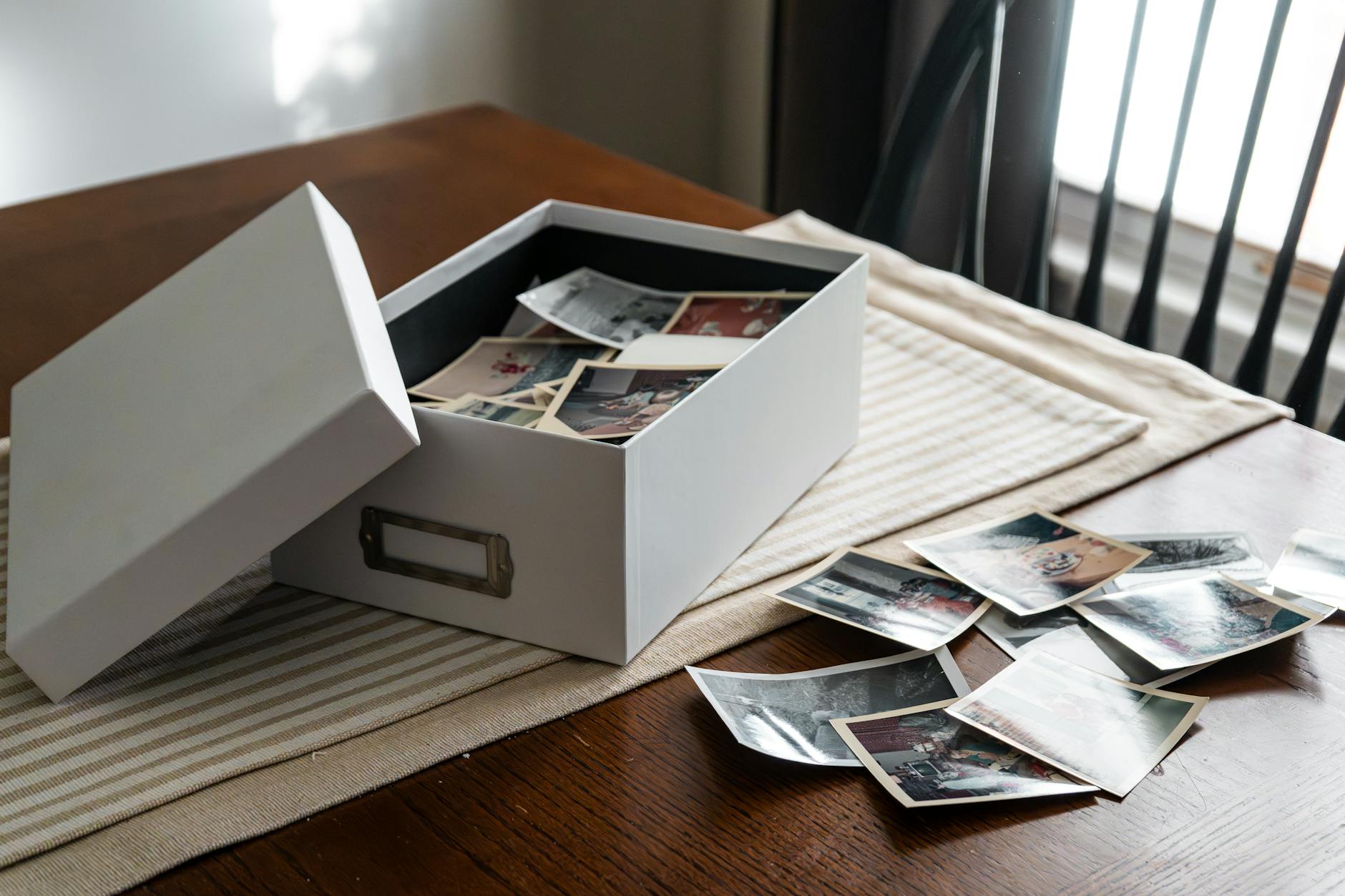
Somewhere in a shoebox in your parents' attic — or maybe your grandparents' — there's probably a stack of small, square photographs with scalloped edges. Some are slightly blurry. A few have a thumb obscuring the corner. The colors have shifted toward orange over the decades. And yet, if you sat down and went through them, you'd probably feel something. Something real.
Now open your phone's camera roll. How many photos do you have? A thousand? Five thousand? Do you remember taking most of them?
That gap — between the weight of an old photograph and the weightlessness of a modern one — is one of the more quietly significant cultural shifts of the last 30 years. It happened fast, it happened completely, and most of us barely noticed it while it was happening.
The Ritual of the Film Roll
To understand what photography used to mean, you have to understand what it cost — not just in money, but in patience and uncertainty.
A standard roll of 35mm film gave you 24 or 36 exposures. That was it. Once you'd used them, the roll was done. You couldn't review your shots. You couldn't retake a bad one. If you blinked at the wrong moment, or the lighting was off, or someone moved — you wouldn't know until the photos came back from the lab, sometimes weeks later.
Developing film wasn't free, either. In the 1980s and early 1990s, a roll of film plus processing and printing could run $10 to $15, which is roughly $25 to $40 in today's dollars. For a family on a modest budget, that meant photography was selective by necessity. You didn't photograph your lunch. You didn't take 47 shots to get one good one. You framed the shot, you waited for the moment, and you pressed the shutter with intention.
The wait itself was part of the experience. You'd drop off your roll at the drugstore — Walgreens, Eckerd, CVS — and come back a few days later, or wait the standard one-hour development if you were impatient and willing to pay extra. Picking up the envelope was a minor event. You'd flip through the prints right there at the counter, seeing your own memories rendered in physical form for the first time. Some shots were terrible. Some were unexpectedly beautiful. All of them were final.
Then Everything Changed at Once
Digital cameras started appearing in consumer markets in the mid-1990s, but they were expensive, low-resolution, and awkward. The real inflection point came in 2007, when the first iPhone shipped with a built-in camera and — critically — a screen that let you see what you were about to photograph in real time.
Within a few years, film photography went from mainstream to niche to almost invisible. Kodak, which had dominated the photography industry for over a century, filed for bankruptcy in 2012. The drugstore photo counter — once a fixture of American suburban life — quietly disappeared from most locations.
What replaced it was something almost incomprehensibly different in scale. In 2023, an estimated 1.8 trillion photographs were taken worldwide. To put that in context: in 1999, the year before digital cameras really began to penetrate the consumer market, roughly 80 billion photos were taken globally — almost all of them on film. In roughly two decades, annual photo production increased by more than 2,000 percent.
The Psychology of Scarcity vs. Abundance
Here's where it gets interesting, and a little uncomfortable.
Psychologists who study memory and emotion have noted something counterintuitive about the shift to digital photography: despite taking far more photos, many people feel their memories are actually less vivid and less emotionally resonant than those captured on film.
One theory is the "photo-taking impairment effect," documented in research from Fairfield University — the idea that relying on a camera to record an experience can reduce how deeply you encode that experience in your own memory. When you know the photo exists, your brain partially outsources the remembering.
But there's a simpler dynamic at play too: scarcity creates value. When you had 24 frames to capture an entire vacation, every single one of those images carried weight. Your grandmother's birthday party, documented in six photographs, feels like a precious artifact. The same event documented in 340 smartphone images, most of them nearly identical, feels like data.
This isn't just nostalgia talking. Ask yourself: when did you last print a photograph? When did you last frame one and put it on a wall? For most people under 40, the honest answer is "rarely" or "never." Photos live in the cloud now, in invisible folders that most people never scroll back through. The Library of Congress estimates that billions of digital photos are effectively lost each year — not deleted, just never viewed again.
The Instagram Effect and the Performance of Memory
Social media added another layer to this shift that goes beyond just volume. Photography increasingly became a performance — something done not just to remember, but to be seen remembering.
The Instagram era (and now TikTok, and whatever comes next) transformed the photograph from a private archive into a public broadcast. The question shifted from "how do I capture this moment?" to "how do I make this moment look good to other people?" Filters, angles, lighting setups, reshoots — the gap between what happened and what gets photographed widened.
There's something worth sitting with there. The old shoebox photo of your mom at age 25, slightly blurry, catching her off-guard at a family barbecue — that's a document of a real moment. It wasn't curated. It wasn't retouched. It just was.
What Gets Kept, What Gets Lost
None of this means digital photography is bad. The accessibility is genuinely extraordinary. Families separated by distance can share moments in seconds. Medical imaging, scientific documentation, journalism — digital photography has transformed all of it for the better. The ability to take 50 shots of your kid's first steps until you get one that's actually in focus is, objectively, a gift.
But something shifted in the relationship between photographs and meaning. When images were scarce, they accumulated significance automatically. Now that they're infinite, significance has to be manufactured — through printing, framing, curating, deliberately slowing down.
The generation that grew up with film rolls understood photography as an act of commitment. The generation that grew up with smartphones understands it as an act of reflex. Neither is wrong. But they're not the same thing.
Maybe the most honest way to think about it is this: we haven't lost the ability to take meaningful photographs. We've just lost the system that forced us to.