Duct Tape, Spare Parts, and Pride: When Americans Fixed Things Instead of Tossing Them
Somewhere in a garage in Ohio, there's a 1978 KitchenAid stand mixer that still works. It's been rewired twice, had its gears greased more times than anyone can count, and outlived three marriages and two houses. Nobody threw it away. Nobody even considered it.
That mixer represents an entire philosophy of ownership that most Americans under 40 have never really experienced — the idea that when something broke, your first instinct was to fix it, not replace it.
The World That Was Built to Last
In the 1960s, 70s, and into the 80s, consumer goods were designed with a different logic. Televisions had backs you could remove. Radios had tubes you could swap out at the hardware store. Washing machines were mechanical enough that a determined homeowner with a library book and a wrench could diagnose most problems themselves. Appliance repair shops existed on nearly every main street in America, and they stayed busy.
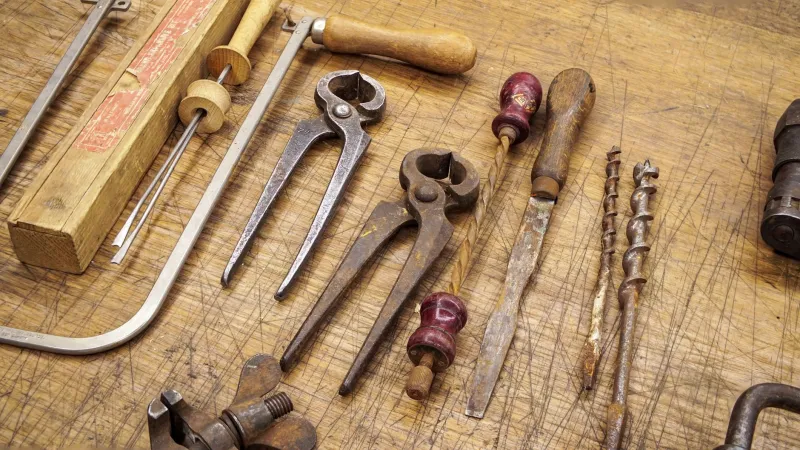
This wasn't just about economics, though things were certainly more expensive relative to wages. It was a cultural posture. People took pride in keeping things running. A dad who could rebuild a carburetor or resole a pair of boots occupied a specific kind of respected status in the neighborhood. Skill with your hands meant something. Knowing how things worked meant something.
Sears sold replacement parts for appliances right alongside the appliances themselves. The assumption baked into the retail model was that you'd need them eventually — and that you'd use them.
The Shift Nobody Really Announced
It didn't happen overnight, but by the mid-1990s, the economics of manufacturing had quietly rewritten the rules. Goods got cheaper to produce, which meant they got cheaper to buy, which meant the math on repair started to shift. Why spend $60 getting your VCR fixed when a new one costs $80?
Then electronics got smaller and more integrated. Circuit boards replaced individual components. Chips replaced tubes. Devices that once had screws started arriving with clips, adhesives, and proprietary fasteners that required specialized tools most people didn't own. The message, whether intentional or not, was clear: don't open this.
By the time the smartphone era arrived, the sealed device had become the norm. Apple's early iPhones didn't even have removable batteries. Laptop RAM became soldered directly to motherboards. Headphone jacks disappeared. The era of the modular, user-serviceable device was over, and the average American consumer had barely noticed it happen.
What We Gained — and What We're Burying
To be fair, some of this progress is genuine. Modern appliances are more energy efficient. Modern electronics are more powerful and more reliable in the short term. A smartphone from 2024 does things that would have seemed like science fiction in 1985. The tradeoffs aren't imaginary.
But the consequences are piling up — literally. The United States generates more than 6 million tons of electronic waste every year. Old phones, broken tablets, dead laptops, discarded earbuds. Most of it ends up in landfills, or shipped overseas to countries with fewer environmental regulations, where it leaches heavy metals into soil and groundwater.
And beyond the environmental cost, there's a quieter loss. Repair culture taught people how things worked. A kid who helped their father fix a lawn mower learned something about engines, about patience, about the satisfaction of solving a physical problem with your hands. That education has largely evaporated. Most people today couldn't tell you what's inside their refrigerator, let alone how to fix it.
The Right to Repair Fight
There's a movement pushing back — slowly, and against significant corporate resistance. Right to Repair legislation has been gaining ground in states across the country, with advocates arguing that consumers should have legal access to parts, tools, and documentation needed to fix their own devices. Apple, John Deere, and other major manufacturers have fought these efforts hard, arguing that repairs by untrained users create safety risks and intellectual property concerns.
Some states have passed limited versions of right to repair laws. The EU has gone further, mandating that certain electronics sold in Europe must be repairable for a minimum number of years. In the US, the fight is ongoing and unresolved.
Meanwhile, a small but passionate community of repair enthusiasts — iFixit contributors, YouTube teardown channels, local repair cafés where volunteers help neighbors fix broken appliances for free — keeps the old spirit alive on the margins.
What It Says About Us
There's something revealing in the shift from repair culture to replacement culture. It's not just about convenience or cost. It reflects a deeper change in how we relate to the objects in our lives. When you fix something, you develop a relationship with it. You understand it. You invest in it. You feel something when it finally works again.
When you throw something away and order a new one by Thursday, that relationship never forms. The object is a service, not a possession. And when the next version comes out six months later, there's no particular reason to feel attached to what you're discarding.
That 1978 KitchenAid mixer in Ohio is still running partly because it was built well. But it's also still running because someone, decades ago, decided it was worth the effort to keep alive. We've lost something in trading that instinct away — and no algorithm is going to recommend it back to us.