The Pilgrimage to Understanding
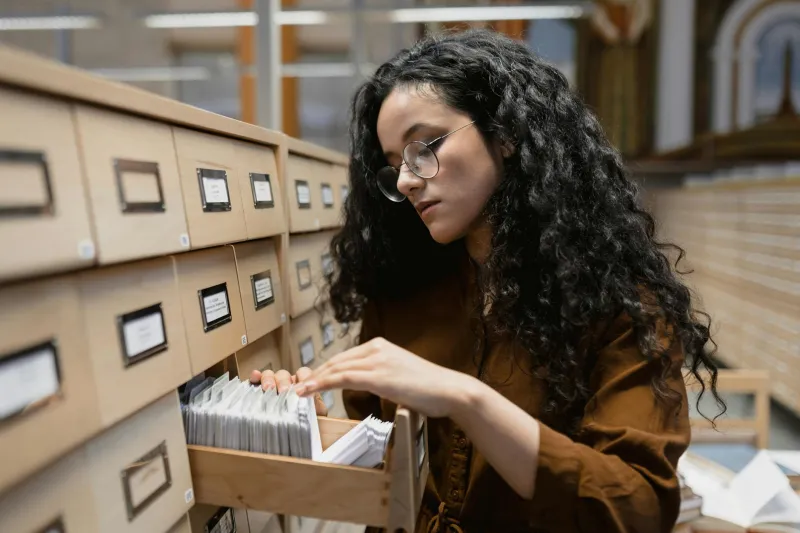
Every Saturday morning in 1985, twelve-year-old Maria Rodriguez would walk six blocks through her Chicago neighborhood to reach what she considered the most important building in America: the public library. Armed with nothing but curiosity and a worn library card that had belonged to her older brother, she'd spend hours hunting through card catalogs, pulling heavy encyclopedias from towering shelves, and photocopying pages with the reverence of someone handling sacred texts.
This wasn't unusual. Across America, millions of kids like Maria understood that knowledge lived in a specific place, required effort to obtain, and demanded respect once found. The library wasn't just a building—it was democracy's promise made tangible, offering equal access to information regardless of your family's bank account or zip code.
When Information Was Earned, Not Given
In pre-internet America, research was a physical act. You couldn't just type a question into a search bar and get 847,000 results in 0.3 seconds. You had to know where to look, how to look, and—most importantly—you had to want the answer badly enough to work for it.
The card catalog system forced you to think strategically. You'd start with one subject heading, follow cross-references, discover unexpected connections, and often stumble onto information you never knew you needed. A search for "Civil War battles" might lead you to a biography of Clara Barton, which could spark an interest in nursing history, which might open up questions about women's roles in medicine.
This wasn't inefficiency—it was education disguised as exploration.
Librarians weren't just book organizers; they were knowledge sherpa guides who could navigate the complex terrain of human information. They knew which encyclopedia had the best maps, which periodical index would unlock magazine articles from 1962, and how to track down that one specific statistic you desperately needed for your term paper.
The Great Equalizer in Action
The public library represented something beautiful about American ideals: the belief that access to information shouldn't depend on economic status. A kid from the projects could sit next to a retired professor, both equally entitled to the same books, the same quiet study spaces, the same patient help from librarians.
Families who couldn't afford Encyclopedia Britannica's $1,600 price tag (about $4,000 in today's money) could access not just one set of encyclopedias, but dozens. Kids whose schools lacked resources could research college applications, scholarship opportunities, and career paths that nobody in their family had ever explored.
The library was where America kept its promise that knowledge could lift you up, regardless of where you started.
The Paradox of Infinite Access
Today, we carry more information in our pockets than the Library of Congress contained in 1985. We can fact-check conversations in real-time, settle debates instantly, and access virtually any piece of human knowledge from anywhere on Earth. This should be the golden age of learning.
Instead, we're drowning in information while starving for knowledge.
The same technology that made research effortless has made deep curiosity optional. When answers are always one click away, we've lost the motivation to ask better questions. When information flows endlessly past us on social media feeds, we've forgotten how to hunt for specific truths.
What We Lost in the Translation
The old library system taught patience, persistence, and the joy of unexpected discovery. You couldn't just Google "quick facts about Napoleon" and move on—you had to commit to learning about Napoleon, which meant understanding the French Revolution, which led to questions about European politics, which opened up entire worlds of knowledge.
That friction wasn't a bug; it was a feature. The effort required to access information made us value it more, remember it longer, and connect it to other ideas in meaningful ways.
Modern search algorithms, designed to give us exactly what we want as quickly as possible, have eliminated the beautiful accidents that used to drive human learning. We get answers, but we've lost the art of questioning.
The Quiet Revolution Nobody Noticed
Library circulation peaked in the early 2000s and has been declining ever since, even as populations grew. It's not that libraries became obsolete—they evolved into community centers, computer labs, and social services hubs. But their role as America's primary gateway to knowledge quietly ended.
We gained convenience but lost something harder to quantify: the shared cultural experience of seeking knowledge together. The library was one of the last places where Americans of all backgrounds gathered for the same purpose, pursuing learning as a communal act rather than an individual consumption habit.
The Questions We Stopped Asking
In an age where information is infinite and free, the most valuable skill isn't finding answers—it's knowing which questions are worth asking. The old library system, with all its limitations and inefficiencies, forced us to develop that skill by making every piece of information precious.
Today's kids will never experience the thrill of finally tracking down that one perfect source after hours of searching, or the satisfaction of checking out an armload of books that represented weeks of planned reading. They'll never know the particular quiet of a library reading room, where the only sounds were turning pages and the distant whisper of the card catalog drawers sliding shut.
Progress gave us instant access to everything. But sometimes, when everything is available, nothing feels special anymore.