When Car Dealers Actually Wanted to See You Again: The Death of the Neighborhood Auto Relationship
Walk into any car dealership today and you'll be greeted by a salesperson armed with tablets, financing calculators, and a menu of warranty packages that would make a restaurant jealous. Forty years ago, that same visit might have started with someone asking, "How's your dad's Buick running?" – because they actually remembered selling it to him three years earlier.
When Dealerships Were Neighborhood Institutions
Through much of the mid-twentieth century, car dealerships operated more like family businesses than corporate retail outlets. The owner lived in town, sponsored Little League teams, and could often be found on the lot on Saturday mornings chatting with customers about more than just monthly payments. These weren't just places to buy cars – they were community anchors that built relationships designed to last decades.
Sales staff typically worked at the same dealership for years, sometimes entire careers. They learned customers' names, remembered their preferences, and understood that selling you a car was just the beginning of a long-term relationship. When you brought your vehicle in for service, the same people who sold it to you would ask how it was treating you – and genuinely care about the answer.
The service department operated with similar familiarity. Mechanics would recognize regular customers' cars by sound alone, knowing that Mrs. Johnson's Oldsmobile had that particular rattle that wasn't worth fixing, or that Mr. Peterson always requested the same technician because he trusted his work. These relationships created accountability that extended far beyond warranty periods.
The Art of the Honest Explanation
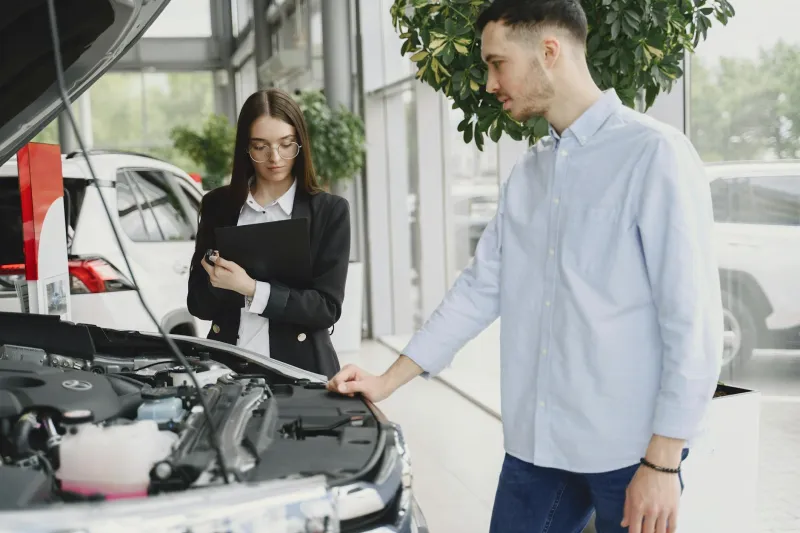
Perhaps nothing illustrates the transformation of car dealerships more clearly than how service advisors used to communicate with customers. In the 1970s and 1980s, when your car needed repair, the service manager would walk you to your vehicle, pop the hood, and show you exactly what was wrong using language you could understand.
"See this belt here? It's starting to crack. Won't leave you stranded today, but I'd replace it in the next month or two." These conversations happened in the service bay, with your actual car, using your actual parts. The goal wasn't to maximize the repair bill but to help you understand what your vehicle needed and when.
Service advisors took pride in their ability to explain complex mechanical problems in simple terms. They'd draw diagrams on shop rags, use analogies that made sense to non-mechanics, and always give you options. "We can do the full brake job today, or just the front pads to get you by until Christmas. Your call."
This transparency extended to pricing. Labor rates were posted on the wall, parts markup was reasonable and consistent, and surprise charges were rare because everything was explained upfront. The relationship depended on trust, and trust required honesty about both problems and costs.
The Personal Touch That Built Loyalty
Dealerships in this era understood that customer loyalty was earned through small gestures and personal attention. Service departments kept detailed handwritten records of each customer's vehicle history, noting not just repairs but preferences and concerns. Some mechanics would leave handwritten notes explaining what they'd done and what to watch for in the future.
Regular customers received perks that weren't advertised: loaner cars when major repairs took extra time, priority scheduling during busy periods, or payment plans for unexpected major expenses. These courtesies weren't corporate policy – they were individual decisions made by people who knew their customers personally.
The best dealerships also understood timing and financial pressure. A good service advisor might suggest spreading major maintenance across several months, or recommend waiting until after the holidays for non-critical repairs. They knew their customers' budgets and respected them.
When Buying a Car Was a Conversation, Not a Process
The car-buying experience itself operated on fundamentally different principles. Salespeople spent time understanding what customers actually needed rather than pushing them toward the highest-margin vehicles. A good salesperson might talk you out of options you didn't need or suggest a less expensive model that better fit your situation.
Negotiation happened across kitchen tables as much as showroom desks. Salespeople would visit customers' homes to discuss deals, bring vehicles by for family members to see, and sometimes arrange financing through personal relationships at local banks. The process was slower but more personal, focused on finding solutions rather than maximizing profit per transaction.
Trade-in evaluations involved actual inspection and honest assessment. A salesperson might point out maintenance needs that would affect resale value, or suggest minor repairs that could significantly improve your trade-in offer. This advice came from people who would see you again, who had reputations to maintain in small communities.
The Corporate Transformation
The shift toward today's dealership model began in the 1990s as manufacturers imposed new standards for facilities, customer service processes, and sales procedures. The goal was consistency and efficiency, but the result was the gradual elimination of personal relationships in favor of standardized experiences.
Modern dealerships operate more like retail chains than local businesses. Sales staff turnover is high, computer systems track every interaction, and corporate policies dictate how customers should be handled. The focus shifted from building long-term relationships to maximizing revenue per customer visit.
Service departments became profit centers rather than customer retention tools. Diagnostic computers replaced mechanical intuition, and service advisors began working from screens rather than walking customers to their vehicles. The personal knowledge that once made service feel like a conversation with a trusted friend was replaced by data printouts and manufacturer recommendations.
The Modern Maze of Upsells and Warranties
Today's car-buying experience reflects this transformation completely. Extended warranties, paint protection, gap insurance, and service contracts are presented as essential rather than optional. The sales process has become a series of profit opportunities rather than a conversation about transportation needs.
Service advisors now work from diagnostic reports they often don't fully understand themselves, recommending repairs based on computer prompts rather than mechanical knowledge. The old practice of showing customers actual problems has been replaced by printed estimates that customers are expected to accept on faith.
The relationship between customer and dealership has become transactional rather than personal. Staff members change frequently, customer history is stored in computers rather than human memory, and the focus is on processing customers efficiently rather than serving them individually.
What We Lost When Cars Became Commodities
The transformation of car dealerships from community institutions to corporate retail outlets represents more than just business evolution – it's a fundamental shift in how Americans relate to major purchases and ongoing service relationships.
The old model wasn't perfect. Personal relationships could sometimes lead to favoritism or inconsistent pricing. Small dealerships lacked the resources to offer some services that modern facilities provide. But the accountability that came with personal relationships created a level of customer care that corporate policies struggle to replicate.
Modern dealerships are more efficient, offer more financing options, and provide more consistent experiences across locations. But they've lost the human element that once made buying and servicing a car feel like joining a community rather than navigating a business process.
The Price of Progress
The next time you're sitting in a dealership service waiting area, surrounded by other customers staring at their phones while service advisors read from computer screens, remember the mechanics who once knew your car by sound and the service managers who would walk you to your vehicle to show you exactly what needed fixing.
They worked in an era when customer relationships were measured in decades rather than transactions, when trust was built through transparency rather than warranties, and when buying a car meant joining a community that actually wanted to see you again.
In our pursuit of efficiency and consistency, the auto industry may have solved many problems – but it created a new one that no amount of technology can fix: the loneliness of being just another customer in a system designed to process rather than serve.