Routes of Freedom: When Every American Kid Knew How to Navigate the City Solo
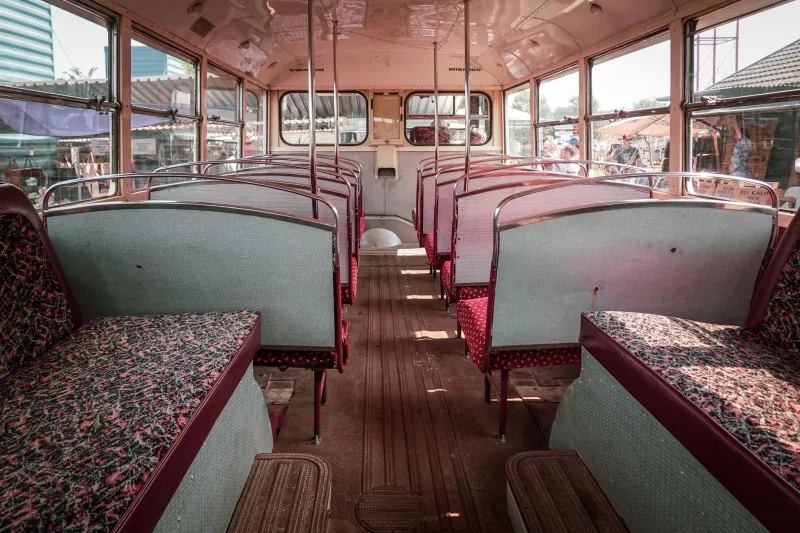
At ten years old, Maria Gonzalez could navigate Chicago's entire South Side using nothing but a bus schedule, exact change, and the kind of street wisdom that modern parents would consider criminally negligent to expect from a child. She'd catch the #4 Cottage Grove bus downtown, transfer to the #36 Broadway to reach Wrigley Field, and make it home before dinner—all without a cell phone, GPS, or adult supervision.
 Photo: Wrigley Field, via a.travel-assets.com
This wasn't exceptional parenting or unusual independence. This was Tuesday.
Across America in the 1960s and 70s, children as young as eight routinely mastered complex urban transit systems, navigating multiple bus routes, reading schedules, and exploring entire metropolitan areas armed with nothing more than their wits and whatever coins they could scrape together. The idea that kids needed constant adult supervision to move through the world would have seemed as foreign as requiring a helmet to ride a bicycle.
The Transit Generation
Before the suburban exodus fully transformed American childhood, most kids grew up in neighborhoods where public transportation wasn't just available—it was essential. Cities were designed for walking and transit use, with buses running frequently enough that missing one wasn't a crisis.
Children learned the system by necessity and osmosis. They watched their parents read route maps, listened to drivers call out stops, and gradually absorbed the logic of how their city connected to itself. By age ten or twelve, most urban kids could plot routes across town as easily as they could ride a bike.
The learning process was hands-on and forgiving. Bus drivers knew their regular passengers, including the kids who rode alone. They'd call out stops for young riders, help with transfers, and keep an eye on children who seemed lost or confused. The system had built-in human safety nets that no app can replicate.
Fare structures were simple enough for children to understand: a dime or quarter per ride, with transfers available for a few cents more. Kids could calculate exactly how much money they needed for any trip, and exact change was expected. Running short meant walking home or negotiating with a sympathetic driver.
Adventures in Independence
For children, mastering public transit meant unlocking the entire city. A kid in Brooklyn could spend Saturday afternoon at Coney Island, catch a movie in Times Square, or visit the museum in Manhattan—all for the price of subway tokens they'd saved from lunch money.
 Photo: Coney Island, via beehiiv-images-production.s3.amazonaws.com
This mobility created a different kind of childhood, one where kids developed genuine independence and problem-solving skills. When you missed the last bus home, you had to figure out alternative routes or find a phone to call for help. When you got lost, you had to read maps, ask directions, or retrace your steps. There was no GPS to bail you out, no Uber to summon with a tap.
Parents expected their children to handle these challenges. Sending a twelve-year-old across town to visit grandparents wasn't helicopter parenting—it was normal development. Kids were expected to know their neighborhoods, understand how to get around, and solve basic navigation problems independently.
The consequences of mistakes were usually minor and educational. Get off at the wrong stop? Walk back or catch the next bus going the other direction. Miss your transfer? Learn to read the schedule more carefully next time. These small failures built resilience and spatial intelligence that served kids well into adulthood.
The Geography of Trust
This system worked because American cities were designed differently, and society operated on different assumptions about safety and supervision. Neighborhoods had more "eyes on the street"—people who knew local kids and would help if needed. Bus stops were social spaces where regular riders looked out for each other.
Public transit itself was more integrated into daily life. Buses carried workers, shoppers, students, and families, creating a cross-section of the community that provided natural supervision. A lost child would quickly attract help from other passengers or the driver.
Cities also maintained infrastructure that supported independent child mobility. Bus stops had shelters and schedules posted prominently. Route maps were available at libraries and schools. The system was designed to be navigable by anyone who could read basic signs and numbers.
Parents taught their children specific skills for transit use: how to have exact change ready, where to sit safely, how to signal for stops, and what to do if they felt unsafe or confused. These weren't survival skills—they were basic urban literacy that every city kid was expected to master.
The Suburban Exodus
The decline of child transit independence began with the massive suburban migration of the 1970s and 80s. As families moved to car-dependent communities, public transportation became less frequent, less reliable, and less safe. Buses that once ran every ten minutes now came every hour, making missed connections a serious problem.
Suburban design eliminated the walkable neighborhoods and frequent transit that made independent child mobility possible. Kids who lived in subdivisions had no way to reach bus stops safely, and the destinations they wanted to visit—friends' houses, shopping centers, recreational facilities—were scattered across car-oriented landscapes.
As public transit ridership declined, the social fabric that provided natural supervision also disappeared. Buses carried fewer families and more people dealing with economic hardship, mental illness, or substance abuse. The community oversight that once protected children on public transit evaporated.
Parents responded rationally to these changes by driving their children everywhere, but this solution created new problems. Kids who never learned to navigate independently grew into adults who struggled with spatial reasoning and problem-solving in unfamiliar environments.
The Digital Dependency
Today's children have access to navigation technology that would seem magical to previous generations. GPS apps provide turn-by-turn directions, real-time transit information, and instant access to alternative routes. Rideshare services eliminate the need to understand public transportation at all.
But this technological sophistication has created a different kind of dependency. Modern kids can summon an Uber to their exact location but can't read a bus map. They can navigate using GPS but become helpless when their phone battery dies. The problem-solving skills that came from figuring out transit systems independently have largely disappeared.
Parents now track their children's movements constantly through smartphone apps, eliminating the genuine independence that built confidence and competence. The idea of a ten-year-old traveling across the city alone seems not just dangerous but impossible to arrange logistically.
Even in cities with excellent public transportation, parents rarely expect their children to master these systems independently. The combination of safety concerns, suburban living patterns, and technological alternatives has made traditional transit skills seem unnecessary.
What Independence Actually Taught
Children who mastered public transit developed more than just navigation skills. They learned to interact with strangers appropriately, to solve problems under pressure, and to move confidently through diverse urban environments. They developed spatial intelligence and mental mapping abilities that served them throughout their lives.
These kids also gained a different relationship with their cities. When you've figured out how to get from your neighborhood to the zoo, the museum, and your friend's house across town, you develop a sense of ownership and belonging that car-dependent kids rarely experience. The city becomes your territory, not just a place your parents drive you through.
The social skills required for transit use—reading body language, asking for help appropriately, managing money, and dealing with delays or problems—translated into general life competence. Kids who could handle the complexity of urban transportation systems approached other challenges with confidence.
The Cost of Convenience
Our current system of driving children everywhere and tracking their movements constantly has eliminated many risks, but it's also eliminated many benefits. We've created a generation of young adults who are simultaneously more connected and more dependent than any in history.
The irony is that today's cities often have better public transportation than they did fifty years ago, but fewer children know how to use it independently. We've made the world safer in many ways while making our children less capable of navigating it confidently.
This isn't an argument for returning to 1970s parenting standards wholesale, but it's worth considering what we've lost in our rush to eliminate all risks from childhood. The competence and confidence that came from mastering complex systems independently can't be taught through apps or developed through supervised activities.
Somewhere in Chicago, there's probably a grandmother who still remembers every bus route on the South Side, learned through countless solo journeys as a child. Her grandchildren can order food delivery to their exact GPS coordinates but would be lost without their phones in the same neighborhoods she conquered with pocket change and street smarts.
Progress isn't always linear, and sometimes the old ways taught lessons we're still trying to figure out how to replace.