The September Pilgrimage
Every September, millions of American families made the same quiet pilgrimage to Kmart, Sears, or their local department store. They walked the toy aisles with purpose, not to buy, but to choose. Children pointed at bicycles and dolls while parents calculated budgets and payment schedules. By October, store layaway departments hummed with activity as families committed to Christmas gifts they wouldn't touch for months.
Layaway was America's original buy-now-pay-later system, except it worked in reverse. You picked your items, put money down, and made payments over weeks or months until you owned them outright. Only then could you take them home. No interest charges, no credit checks, no debt. Just the simple agreement that good things came to those who saved.
For families living paycheck to paycheck, layaway transformed Christmas from financial stress into manageable anticipation. It was democracy in retail form—anyone with discipline could give their kids a magical Christmas morning, regardless of their credit score.
The Ritual of Earning Christmas
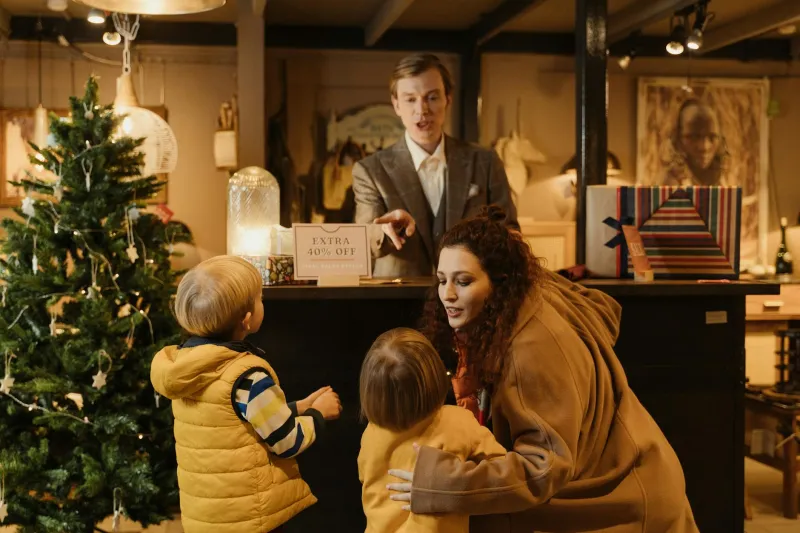
Layaway created its own rhythm in American households. Parents made weekly trips to the store, often bringing children along to "check on" their gifts. Kids learned that the bicycle in the back room was theirs, but only if Mom and Dad kept making payments. Christmas became something you earned together, one installment at a time.
The process taught lessons that credit cards never could. Children watched their parents sacrifice small luxuries to make layaway payments. They learned that wanting something and getting it weren't the same thing. They discovered that anticipation could be its own kind of pleasure—that the weeks of waiting made Christmas morning feel truly magical.
Store employees became part of the ritual too. Layaway clerks knew their regular customers by name, tracking payment progress and offering encouragement during tight months. They held back popular items for families they knew were coming. The transaction was personal, human, and built on trust that extended far beyond any legal contract.
When Instant Became Normal
Layaway began its decline in the 1980s as credit cards became ubiquitous and store policies shifted toward immediate gratification. Why wait months for a toy when you could charge it today and worry about payment later? Retailers discovered they made more money from credit purchases and impulse buying than from the patient discipline layaway required.
The cultural shift was even more dramatic than the financial one. American consumers stopped seeing delayed gratification as virtuous and started viewing it as inefficient. The idea of wanting something for months before getting it began to feel almost cruel when instant purchasing was possible. Layaway departments shrank, then disappeared entirely from most major retailers.
By the 2000s, layaway had become a relic of poverty—something only used by families too poor for credit cards. The practice that once represented middle-class prudence was rebranded as a last resort for the financially desperate.
The Credit Card Christmas Revolution
Credit cards didn't just replace layaway; they revolutionized how America approached Christmas entirely. Suddenly, gift-giving had no natural limits beyond credit limits. Parents could buy everything on their children's wish lists, and worry about payment in January. The constraint that once forced families to choose carefully between gifts disappeared.
This liberation came with costs that weren't immediately obvious. Holiday debt became a national epidemic, with average American families carrying over $1,000 in Christmas-related credit card debt well into the following year. The joy of Christmas morning got complicated by the anxiety of January bills.
More subtly, instant gratification changed the emotional experience of gift-giving. Without the months of anticipation that layaway created, Christmas presents became expected rather than miraculous. Children stopped learning that good things required patience and planning. The magic of Christmas morning diminished when it became just another shopping day with better wrapping paper.
The Return of Artificial Scarcity
Today's buy-now-pay-later services like Klarna and Afterpay represent a fascinating evolution—or devolution—of the layaway concept. They promise the instant gratification of credit cards with the payment structure of layaway, except in reverse. You get the item immediately and pay for it over time, often with penalties for missed payments that layaway never imposed.
These services have exploded in popularity, especially among younger consumers who've grown up expecting instant delivery but struggle with traditional credit. Yet they lack layaway's most valuable feature: the forced patience that created anticipation and taught financial discipline.
Some retailers have quietly brought back traditional layaway, marketing it as a "vintage" shopping experience. But these revivals feel forced, like trying to recreate a cultural ritual without the cultural context that made it meaningful.
The Patience We Traded Away
The death of layaway represents more than a change in payment methods—it marks the end of an entire philosophy about desire, patience, and reward. Layaway taught families that the best things in life were worth waiting for, that anticipation could enhance rather than diminish joy, and that financial discipline was a form of love.
Modern Christmas shopping, with its one-click ordering and same-day delivery, has eliminated nearly every friction between wanting and getting. We've gained convenience but lost the sweet ache of anticipation that made Christmas morning feel like the culmination of months of shared effort and sacrifice.
Perhaps the real gift layaway gave American families wasn't the ability to afford Christmas presents—it was the ability to savor Christmas itself. In our rush to eliminate waiting, we may have eliminated the very thing that made the wait worthwhile.
The empty layaway departments in America's stores stand as monuments to a more patient time, when good things came to those who saved, and Christmas morning felt earned rather than expected.